 how-to
Chiropractic Laser Therapy for Inflammation Relief
Table of Contents
- What Is Chiropractic Laser Therapy?
- How Laser Therapy Works to Reduce Inflammation
- Benefits of Class IV Laser Therapy
- Conditions Treated With Laser Therapy
- How Long Does a Laser Therapy Session Take?
- Combining Laser Therapy With Chiropractic Adjustments
- Is Laser Therapy Covered by Insurance?
- Safety and Side Effects
- Frequently Asked Questions
Last Updated: September 21, 2026
What Is Chiropractic Laser Therapy?
Chiropractic laser therapy for inflammation relief uses focused light energy to reduce swelling, pain, and tissue damage. It's a non-invasive treatment that works at the cellular level. The therapy goes by several names: low-level laser therapy (LLLT), photobiomodulation, or Class IV laser therapy, depending on the power level and wavelength used.
At HealthSource Chiropractic of Greensboro, we use advanced laser technology alongside chiropractic adjustments to address inflammation from injuries, chronic pain, and degenerative conditions. Unlike medications that mask pain, laser therapy targets the root cause by stimulating your body's natural healing response.
The treatment is safe, painless, and requires no downtime. Most patients feel comfortable returning to normal activities immediately after a session. Research shows that photobiomodulation therapy offers a non-invasive, safe, drug-free method for pain relief of both acute and chronic conditions.
How Laser Therapy Works to Reduce Inflammation
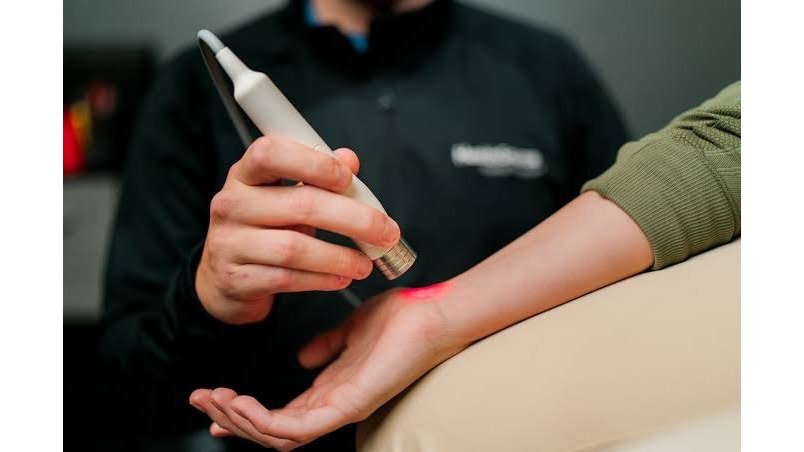
When laser light enters your tissue, it stimulates the mitochondria, the powerhouse of your cells, in a process called photobiomodulation.
Photobiomodulation and Cellular Healing
Photobiomodulation is the process by which light energy activates cellular structures to promote healing, reducing inflammation, decreasing pain signals, and accelerating tissue repair.
The specific wavelengths used in chiropractic laser therapy penetrate between 600 and 1,000 nanometers into the skin. This depth allows the light to reach deep muscles, joints, and connective tissue where inflammation often hides. Low-level laser therapy reduces inflammation and edema, induces analgesia, and promotes tissue healing, according to research from the National Center for Biotechnology Information.
ATP Production and Tissue Regeneration
Laser therapy boosts ATP production, adenosine triphosphate, the energy currency of your cells. More ATP means your cells have the fuel to repair damage and reduce inflammation.
The laser stimulates mitochondrial activity, increasing ATP production so your cells can reduce swelling, activate lymphatic drainage, strengthen connective tissue, and speed tissue regeneration.
Benefits of Class IV Laser Therapy
Class IV lasers are the most powerful lasers available for clinical chiropractic use, penetrating deeper and treating larger areas faster than lower-power devices.
Class III vs. Class IV: What's the Difference?
Class III lasers (also called "cold lasers" or low-level laser therapy devices):
- Power output: Less than 5 watts
- Penetration depth: Typically 1-3 centimeters
- Treatment area: Small, focused spots (1-2 square inches)
- Session time: 10-30 minutes per area
- Cost: Lower upfront investment for clinics
- Best for: Superficial inflammation, small joints, acute injuries in early stages
Class IV lasers (therapeutic lasers):
- Power output: 5-50+ watts
- Penetration depth: 4-6 centimeters or deeper
- Treatment area: Large areas (4-6 square inches) in a single pass
- Session time: 5-15 minutes per area
- Cost: Higher upfront investment
- Best for: Deep tissue inflammation, chronic conditions, large muscle groups, faster results
A Class IV laser treats your entire lower back in 5 minutes; a Class III laser requires 20-30 minutes for the same area.
Wavelength Matters: Why 1064 Nanometers Works Best
The wavelength (measured in nanometers) determines penetration depth and effectiveness in stimulating cellular healing.
Most Class IV chiropractic lasers use the 1064 nanometer wavelength, which penetrates 4-6+ centimeters and offers optimal balance of penetration depth and cellular stimulation. This reaches deep tissues where chronic inflammation hides, lower back, hip joints, and large muscle groups, without excessive heat or surface damage.
Primary Benefits of Class IV Laser Therapy
According to clinical data from Southeast Chiropractic, patients receiving laser therapy combined with chiropractic care experience up to 30% lower opioid use. This matters if you've been managing pain with medication and want a drug-free alternative.
The measurable benefits include:
- Faster pain relief: Many patients feel improvement within 1-2 sessions due to rapid ATP production and inflammation reduction
- Reduced inflammation: Swelling decreases noticeably in acute injuries; chronic inflammation shows measurable reduction within 3-4 sessions
- Improved mobility: Better range of motion returns as inflammation subsides; most patients regain 30-50% of lost mobility within 2 weeks
- Accelerated healing: Tissue repairs itself more efficiently with increased ATP; healing timelines compress by 20-40% compared to passive recovery
- Non-invasive: No surgery, no needles, no incisions; no risk of infection or surgical complications
- No downtime: You can work, exercise, or resume activities immediately after treatment
- Reduced medication dependence: Many patients reduce or eliminate pain medications as inflammation resolves
Research indicates that cold laser therapy has success rates between 85% and 90% for management of both acute and chronic pain conditions. Class IV lasers achieve similar or higher success rates with shorter treatment times.
Why Clinic Choice Matters
When choosing a clinic, ask: What class and wattage is the laser?; What wavelength?; How long have they used this technology?; Do they combine laser with adjustments?
Conditions Treated With Laser Therapy
Chiropractic laser therapy works for inflammation-driven conditions where tissue healing is the goal. Common conditions treated include:
- Neck pain and whiplash: From auto accidents or poor posture
- Lower back pain: Acute strains or chronic degenerative disc disease
- Knee and joint pain: Arthritis, sports injuries, or wear-and-tear
- Shoulder pain: Rotator cuff injuries or frozen shoulder
- Headaches: Tension headaches linked to neck tightness
- Carpal tunnel and wrist pain: From repetitive stress
- Plantar fasciitis: Heel pain from inflammation
- Muscle strains and sprains: Sports injuries or workplace accidents
The laser works best when inflammation is the primary problem. Combining laser therapy with chiropractic adjustments gives optimal results: the adjustment restores alignment while the laser reduces inflammation and accelerates healing.
How Long Does a Laser Therapy Session Take?
A typical chiropractic laser therapy session lasts 5-15 minutes. The exact time depends on the size of the area being treated and the condition being addressed.
For acute injuries or small areas, treatment takes about 5 minutes. For larger areas or chronic conditions, sessions may extend to 15 minutes. Most practitioners apply the laser immediately after a chiropractic adjustment to maximize benefits.
Treatment frequency varies by condition:
| Condition Type | Typical Frequency | Expected Duration |
|---|---|---|
| Acute injury | 2-3 times per week | 2-4 weeks |
| Chronic pain | 1-2 times per week | 6-12 weeks |
| Maintenance | Monthly or as needed | Ongoing |
Post-Treatment Care and Home Maintenance
Proper post-treatment care extends benefits and prevents inflammation from returning.
Immediately after treatment (0-2 hours):
- Avoid ice or heat for at least 2 hours
- Stay hydrated; laser therapy stimulates lymphatic drainage
- Avoid strenuous activity or heavy lifting for the rest of the day
- Do not apply topical creams or lotions for at least 4 hours
In the first 24-48 hours:
- Continue hydration
- Perform gentle range-of-motion exercises as recommended by your chiropractor
- Apply ice only if swelling increases
- Avoid extreme temperatures
Weekly maintenance between sessions:
- Maintain proper posture to prevent re-creating mechanical stress
- Perform prescribed stretches or mobility work
- Stay active but avoid high-impact activities until treatment is complete
- Continue hydration and anti-inflammatory habits (sleep, stress management, nutrition)
- Apply heat therapy 20-30 minutes daily if approved by your chiropractor
Long-term maintenance (after treatment series):
Effective home strategies include regular chiropractic adjustments, consistent stretching and strengthening exercises, ergonomic adjustments to reduce repetitive stress, and lifestyle factors: adequate sleep, stress reduction, and anti-inflammatory nutrition.
Your chiropractor should provide written post-treatment instructions specific to your condition. If they don't, ask.
Combining Laser Therapy With Chiropractic Adjustments
A chiropractic adjustment realigns your spine and joints; laser therapy reduces inflammation and accelerates tissue healing. Together, the adjustment provides the structural fix while the laser accelerates healing, addressing both mechanical problems and inflammatory response.
Is Laser Therapy Covered by Insurance?
Insurance coverage for chiropractic laser therapy varies by plan and provider. Some plans cover it as part of chiropractic care. Others do not.
Here's what you need to know:
- Medicare does not typically cover laser therapy
- Private insurance coverage depends on your specific plan
- Workers' compensation may cover it for work-related injuries
- Auto insurance sometimes covers it for accident-related injuries
- Many plans require a prescription or referral from your primary care doctor
Safety and Side Effects
Chiropractic laser therapy is a therapeutic modality. It has virtually no side effects when used properly by a trained practitioner.
What you might experience:
-
Mild warmth: The treated area may feel slightly warm during treatment
-
Temporary redness: Skin may appear slightly flushed immediately after
-
No pain: The therapy is completely painless
-
Are pregnant
-
Have active cancer or recent chemotherapy
-
Take photosensitizing medications
-
Have thyroid conditions (avoid direct treatment to the neck)
-
Have epilepsy triggered by light
Frequently Asked Questions
How does laser therapy reduce inflammation in the body?
Laser therapy uses photobiomodulation to stimulate cellular activity at the mitochondrial level, increasing ATP production. This enhanced cellular metabolism accelerates tissue healing, reduces edema, and promotes vasodilation, improved blood flow that delivers oxygen and nutrients to inflamed areas. Low-level laser therapy (LLLT) reduces inflammation and edema while inducing analgesia, supporting the body's natural healing process without medication.
How many laser therapy sessions are needed for inflammation relief?
For comprehensive results, a series of laser therapy sessions may be recommended. The exact number depends on the condition's severity, chronicity, and individual healing response. Your chiropractor will develop a personalized treatment protocol based on your specific needs.
Is laser therapy covered by insurance?
Coverage varies by insurance plan and the specific condition being treated. Some plans cover laser therapy when prescribed as part of a broader chiropractic treatment plan, while others may classify it as an elective service. Contact your insurance provider directly to confirm coverage, or speak with your chiropractor's office, they can often verify benefits and discuss any out-of-pocket costs before treatment begins.
What is the difference between cold laser and Class IV laser therapy?
Cold laser therapy (low-level laser therapy) uses lower-powered wavelengths and penetrates superficial tissues, making it suitable for minor inflammation and surface-level injuries. Class IV laser therapy uses higher-powered wavelengths, allowing deeper tissue penetration to reach joints, muscles, and ligaments.