 how-to
Relieve Upper Back Tightness After Sleeping: A Morning Plan
Last Updated: November 5, 2026
Quick Summary
To relieve upper back tightness after sleeping, first fix your sleep setup: sleep on your back or side with your spine neutral, match your pillow to your position, and avoid stomach sleeping. Then run a 10-minute morning sequence of gentle movement, thoracic mobility, and light activation.
- Stomach sleeping is the worst offender because it keeps your upper back rotated for hours.
- Side sleepers should place a pillow between the knees to stop the top leg rolling forward.
- The morning sequence runs about 10 minutes across gentle movement, targeted mobility, and light activation.
- Thoracic extension over a chair is the safest place to start because it limits how far you go.
- Morning tightness that fades within an hour usually points to position or muscle tension, not disease.
Table of Contents
- Why Your Upper Back Is Tight Every Morning
- How to Sleep With Upper Back Pain Between Shoulder Blades
- Upper Back Pain After Sleeping on Side: Fixing Your Setup
- Upper Back Pain After Sleeping Exercises: A 10-Minute Morning Sequence
- Upper Back Pain in the Morning That Goes Away: What It Signals
- Heat, Ice, and Strengthening: Building a Back That Holds Up
- Red Flags: When Morning Tightness Needs Professional Assessment
- Booking a Chiropractic Evaluation for Morning Back Tightness
- Frequently Asked Questions
Why Your Upper Back Is Tight Every Morning
Waking up with upper back tightness is a common complaint, and it rarely means something serious.
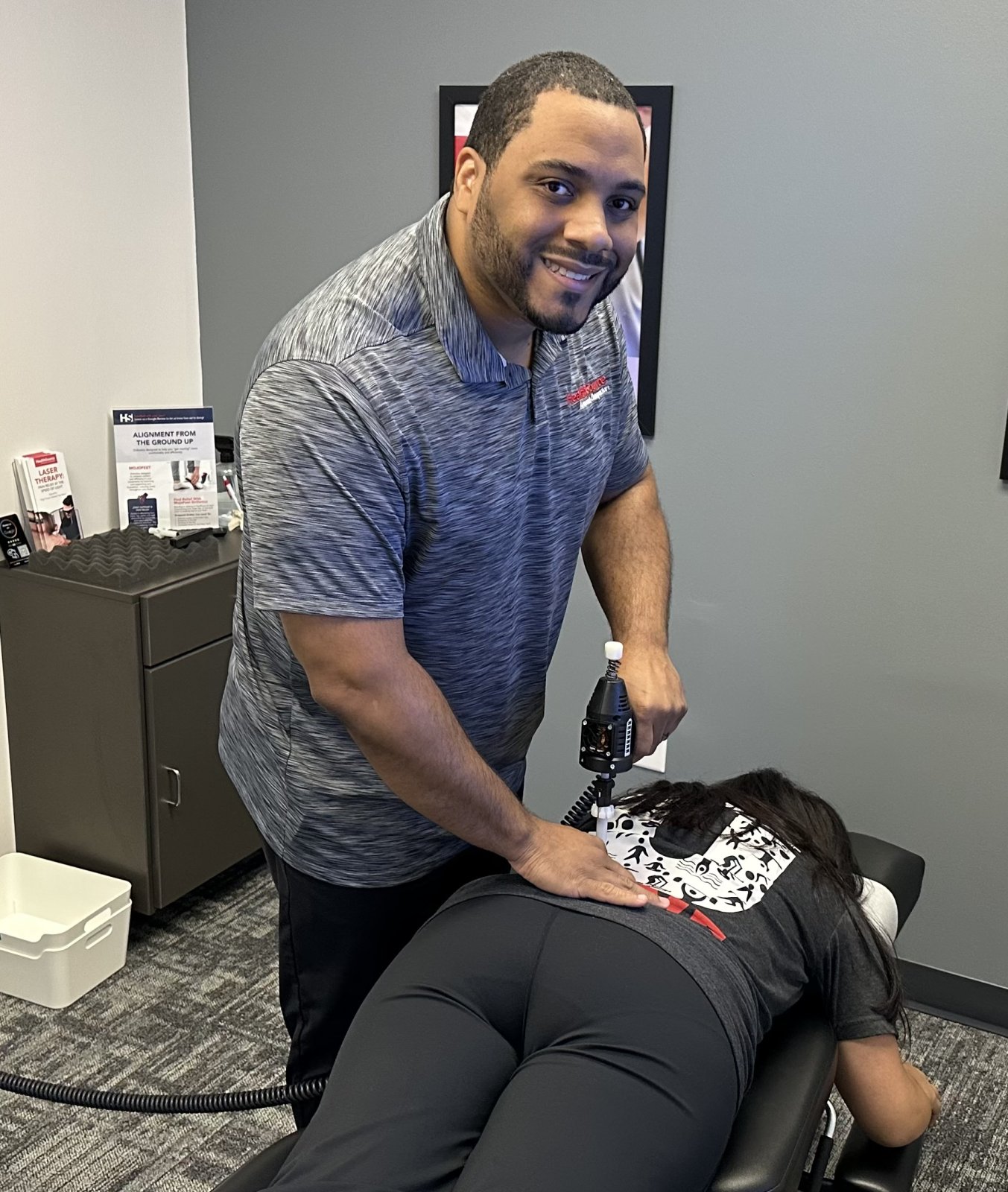
Dr. Tucker demonstrating a treatment
The muscles between your shoulder blades don't get a break at night. If your pillow pushes your head forward or your mattress sags, those muscles stay shortened for hours.
So how do you relieve upper back tightness after sleeping? Start by identifying the cause, then adjust your sleep position, then add a short morning routine.
How to Identify the Likely Cause at Home
Pinpointing the cause takes about five minutes. Try this simple check before you get out of bed:
- Note where the tightness sits: between the blades, along the neck, or one side only
- Test whether it eases within 30 minutes of moving around
- Check if your pillow holds its shape or flattens overnight
If the tightness fades as you move, your setup is the likely culprit. If it lingers past an hour, or travels down your arm, read the red flags section below.
For a deeper walkthrough, see this step-by-step guide on how to find the root cause of back pain.
How to Sleep With Upper Back Pain Between Shoulder Blades
The best sleep position for upper back pain between the shoulder blades is on your back or side with the spine in neutral alignment. Stomach sleeping is the worst offender, because it forces your head to turn and keeps your upper back rotated for hours.
Spinal alignment is the goal. Think of your head, shoulders, and hips stacked in a straight line. Any pillow that pushes your chin toward your chest or tips it back breaks that line.
Pillow Height, Shape, and Neck Support
Pillow support matters more than most people realize. A pillow that's too high jams your neck forward.
Match the pillow to your position:
- Back sleepers: a medium pillow that fills the gap behind your neck
- Side sleepers: a thicker pillow that keeps your head level with your shoulders
- Stomach sleepers: a very thin pillow, or none, to limit neck rotation
A supportive sleep surface matters too. A mattress that sags in the middle pulls your spine out of line no matter how good your pillow is.
For more on building a better night's rest, read these tips on how to increase sleep quality.
Upper Back Pain After Sleeping on Side: Fixing Your Setup
Side sleeping is fine for your back, but only if your hips and shoulders stay stacked. Roll forward and your upper spine twists. That twist is why so many side sleepers wake with one-sided tightness.
Three fixes handle most cases:
- Place a pillow between the knees to stop your top leg from rolling forward
- Use a pillow thick enough to fill the space between your ear and the mattress
- Hug a small pillow to keep your top shoulder from collapsing inward
Sleeping with knees bent and a pillow in place takes pressure off the lower back and keeps the upper spine neutral. If you wake on your stomach despite starting on your side, a body pillow along your back can help you stay put.
Upper Back Pain After Sleeping Exercises: A 10-Minute Morning Sequence
A short morning sequence loosens tight tissue faster than waiting it out, but the order matters.
Use this progression as a default. Times are total time per move, and repetitions are a guide, not a target.
Phase 1, Gentle movement (about 3 minutes)
- Cat-cow (1 minute, 8 to 10 slow cycles): on hands and knees, alternate arching and rounding your spine. Keep the movement in your upper back, not just your lower back.
- Seated thoracic rotation (1 minute, 5 slow rotations per side): sit tall, cross your arms over your chest, and turn gently from the ribcage. Let your head follow your chest.
- Neck rolls (1 minute, 3 slow half-circles per direction): drop your chin and roll slowly from shoulder to shoulder. Do not force the end range.
Phase 2, Targeted mobility (about 4 minutes)
- Thoracic extension over a chair (2 minutes, 6 to 8 slow reps): sit in a chair, hands behind your head, and lean back over the chair edge until you feel a stretch between the shoulder blades. Hold each rep for 3 to 5 seconds.
- Doorway chest stretch (2 minutes, 2 holds of 30 seconds per side): place your forearms on the frame with elbows at shoulder height and step through gently until you feel the front of your chest open.
Phase 3, Light activation (about 3 minutes)
- Wall angels (2 minutes, 8 to 10 slow reps): stand with your back to a wall, keep your ribs down, and slide your arms up and down while keeping contact with the wall.
- Standing rows with a light band or towel (1 minute, 10 to 12 reps): pull your shoulder blades back and down, pause for a second, and return slowly.
Watch out: if a move sends pain down your arm, produces numbness or tingling, or leaves you stiffer afterward rather than looser, stop that move and skip to the red flags section below.
How to Scale the Sequence If You Are Flare-Up Prone
On a bad morning, cut the sequence to Phase 1 only and repeat cat-cow for two minutes. Add Phase 2 the next day if the first phase felt fine. If tightness persists past the first hour for several days, keep the gentle movement but drop the activation work until you have been assessed. The goal is to move daily, not to finish the list.
Thoracic Extension and Rotation Moves
Thoracic extension and rotation restore range of motion in the stiffest part of your upper back. Do them daily, not just on bad mornings.
Strength work supports the fix. Rows and face pulls target the muscles that hold your shoulders back, which counters rounded shoulders from desk work.
Here is the full 10-minute sequence broken down by phase, move, and time.
Phase | Move | Time and reps |
|---|---|---|
Gentle movement | Cat-cow | 1 minute, 8 to 10 slow cycles |
Gentle movement | Seated thoracic rotation | 1 minute, 5 slow rotations per side |
Gentle movement | Neck rolls | 1 minute, 3 slow half-circles per direction |
Targeted mobility | Thoracic extension over a chair | 2 minutes, 6 to 8 slow reps |
Targeted mobility | Doorway chest stretch | 2 minutes, 2 holds of 30 seconds per side |
Light activation | Wall angels | 2 minutes, 8 to 10 slow reps |
Light activation | Standing rows with a light band or towel | 1 minute, 10 to 12 reps |
Upper Back Pain in the Morning That Goes Away: What It Signals
Morning tightness that fades within an hour usually points to position or muscle tension, not disease. That pattern is reassuring.
Morning upper back pain that goes away within an hour is often related to position or muscle tension rather than a more serious cause.
Desk posture can also contribute to upper back tightness, since long periods hunched over a laptop may keep the same muscles shortened.
Heat, Ice, and Strengthening: Building a Back That Holds Up
Some people use heat to ease muscle stiffness and ice to ease soreness after activity. If you are unsure which suits your symptoms, ask a qualified professional.
Strengthening is the long game. A back that holds up needs:
- Rows two to three times a week
- Face pulls for posture
- Daily thoracic mobility work
For a full prevention plan, read this guide on how to prevent recurring back pain.
Red Flags: When Morning Tightness Needs Professional Assessment
Most morning tightness is harmless and eases within an hour of moving.
Likely positional or muscular, self-care is reasonable
- Tightness is worst in the first 30 to 60 minutes and fades as you move
- It stays between the shoulder blades or along the neck and does not travel
- It changes with your sleep setup, pillow, or desk position
Worth a routine appointment in the next week or two
- Tightness that has worsened week over week for more than two to three weeks instead of easing
- Pain that travels down one arm, even without weakness
- Stiffness that does not loosen with movement at all during the day
Seek prompt medical assessment, same day or within 24 hours
- Pain that travels down an arm with numbness, tingling, or weakness in the hand or grip
- Fever, unexplained weight loss, or night pain that wakes you from sleep
- A recent fall, car accident, or other trauma before symptoms started
Emergency care now
- Loss of bladder or bowel control
- New weakness in both legs or difficulty walking
- Severe pain after significant trauma
Watch out: do not start the morning exercise sequence or book a chiropractic evaluation if any prompt or emergency symptom applies. Get assessed first, then return to movement with clearance.
What to Do While You Wait for an Appointment
Keep moving gently within a comfortable range, use heat for stiffness for about 15 to 20 minutes, and avoid heavy lifting or positions that reproduce the arm symptoms. Note when the tightness is worst, what eases it, and whether it travels, that pattern is the most useful thing you can bring to the visit.
For a clearer list, review these signs it's time to see a doctor for back pain.
Booking a Chiropractic Evaluation for Morning Back Tightness
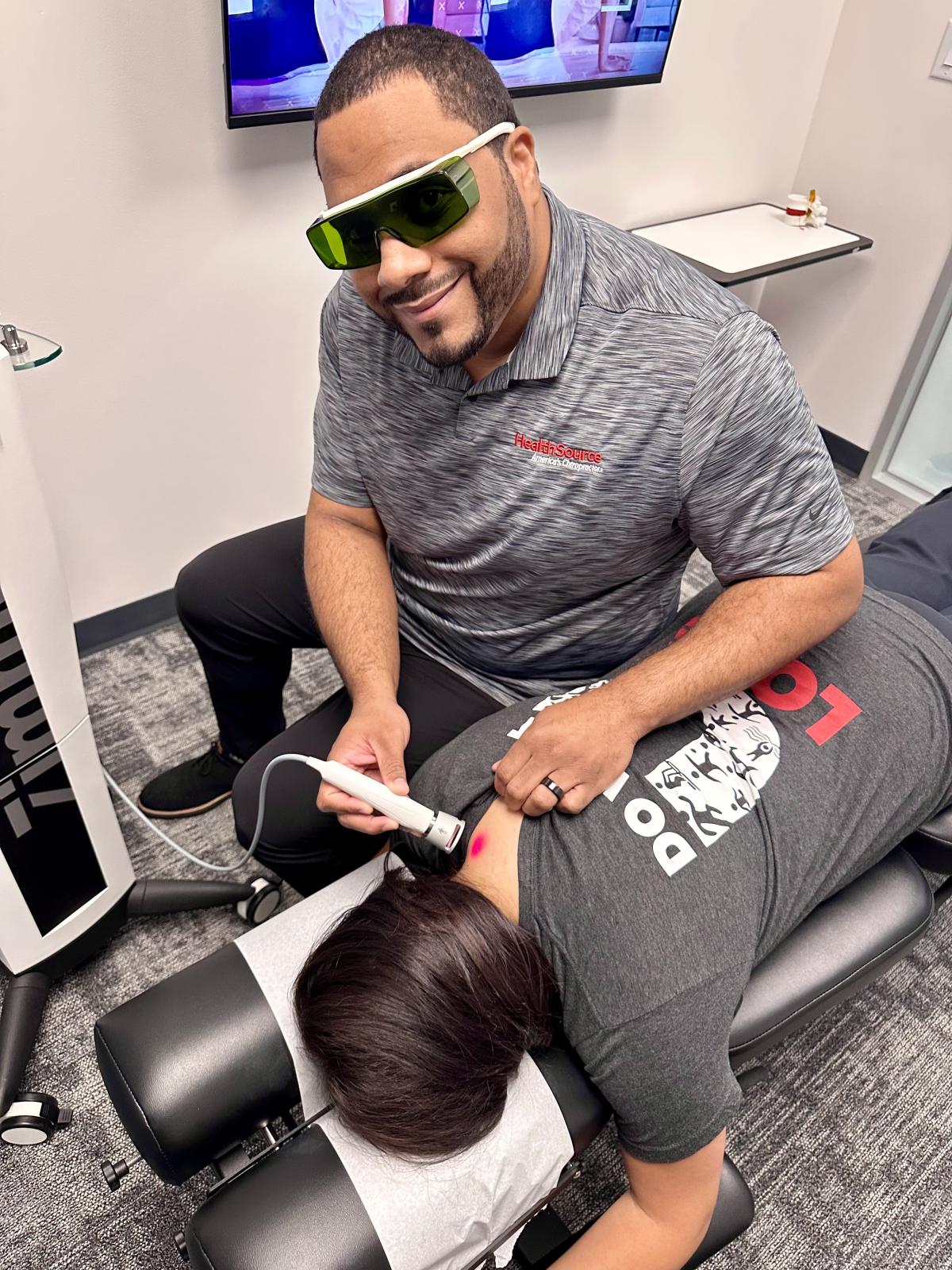
If home fixes haven't helped after a few weeks, an evaluation can pinpoint what's driving the tightness. At HealthSource Chiropractic of Greensboro, we build personalized care plans that combine chiropractic adjustments with Progressive Rehab® and functional exercise. Our team also uses spinal decompression and Class IV laser therapy where they fit.
You can schedule an appointment.
Frequently Asked Questions
Why is my upper back so tight after sleeping?
Most morning upper back tightness comes from hours in one position with poor spinal alignment. A pillow that is too high or too flat, a mattress that sags, or sleeping on your stomach with your head turned can all strain the muscles between your shoulder blades. Muscle tension builds overnight, and the tissues stiffen when you stay still. If the tightness fades within an hour of moving around, your sleep setup is usually the main culprit and worth adjusting first.
What exercises can help upper back pain after sleeping?
Start with gentle moves that restore range of motion before you add load. Cat-cow, thoracic extension over a rolled towel, thoracic rotation while lying on your side, wall angels, and slow neck rolls all target the upper back and shoulders. Do each for 30 to 60 seconds, breathing steadily. Once the tightness eases, add rows and face pulls two or three times a week to strengthen the muscles that hold your shoulders back, which reduces how often the tightness returns.
How long will my back hurt after sleeping wrong?
A simple strain from an awkward night usually settles within one to three days with gentle movement, heat, and short stretching sessions. Tightness that lingers past a week, keeps returning every morning, or comes with numbness, tingling, or pain radiating into an arm is a different situation. That pattern points to something beyond a bad pillow and deserves an evaluation so the cause is identified rather than guessed at.
When should I see a chiropractor for upper back tightness?
Book an evaluation if morning tightness recurs for more than two weeks, limits your work or sleep, or comes with headaches, arm tingling, or weakness. A chiropractor can assess spinal alignment, joint motion, and muscle tension, then build a plan that may combine adjustments with functional rehabilitation and home exercises. Bring notes on your sleep position and when the pain is worst, since that pattern helps pinpoint the cause.
Morning tightness is stubborn, but it's rarely mysterious. Change your pillow, fix your sleep position, run the ten-minute sequence, and give it a few weeks. If it still won't budge, get it looked at. Get started with HealthSource Chiropractic of Greensboro and find the cause instead of guessing at it.