 how-to
How to Find Root Cause of Back Pain: A Step-by-Step Guide
Table of Contents
- Why Finding the Root Cause of Back Pain Matters
- Step 1: Document Your Symptoms and Activity Patterns
- Step 2: Recognize Back Pain Red Flags and When to Seek Urgent Care
- Step 3: Prepare for Your Medical History and Physical Examination
- Step 4: Understand How Doctors Diagnose Back Pain
- Back Pain Diagnostic Tests and Their Limitations
- Common Causes and Recurring Back Pain Causes
- Next Steps: From Diagnosis to Treatment
- Frequently Asked Questions
Last Updated: October 18, 2026
Why Finding the Root Cause of Back Pain Matters
Back pain affects millions of people every year. The challenge isn't just managing the pain, it's figuring out what's causing it in the first place.
Here's the problem: many people treat back pain as a single condition. They take medication, rest, and hope it goes away. But without understanding the root cause of your back pain, you're often just masking symptoms instead of fixing the underlying issue. Discovering what's actually driving your pain changes everything about your treatment approach.
The good news? Most of the time, history and physical examination are sufficient to determine the cause of back pain, according to research from StatPearls. You don't always need expensive imaging or invasive procedures to get answers.
Step 1: Document Your Symptoms and Activity Patterns
Start by tracking what's actually happening with your pain. Most people skip this step and go straight to a doctor with vague descriptions. That's a missed opportunity.
Create a simple symptom diary. Write down:
- When the pain started and how it began
- What time of day it's worst
- Activities that make it better or worse
- How long pain episodes last
- Pain intensity on a scale of 1-10
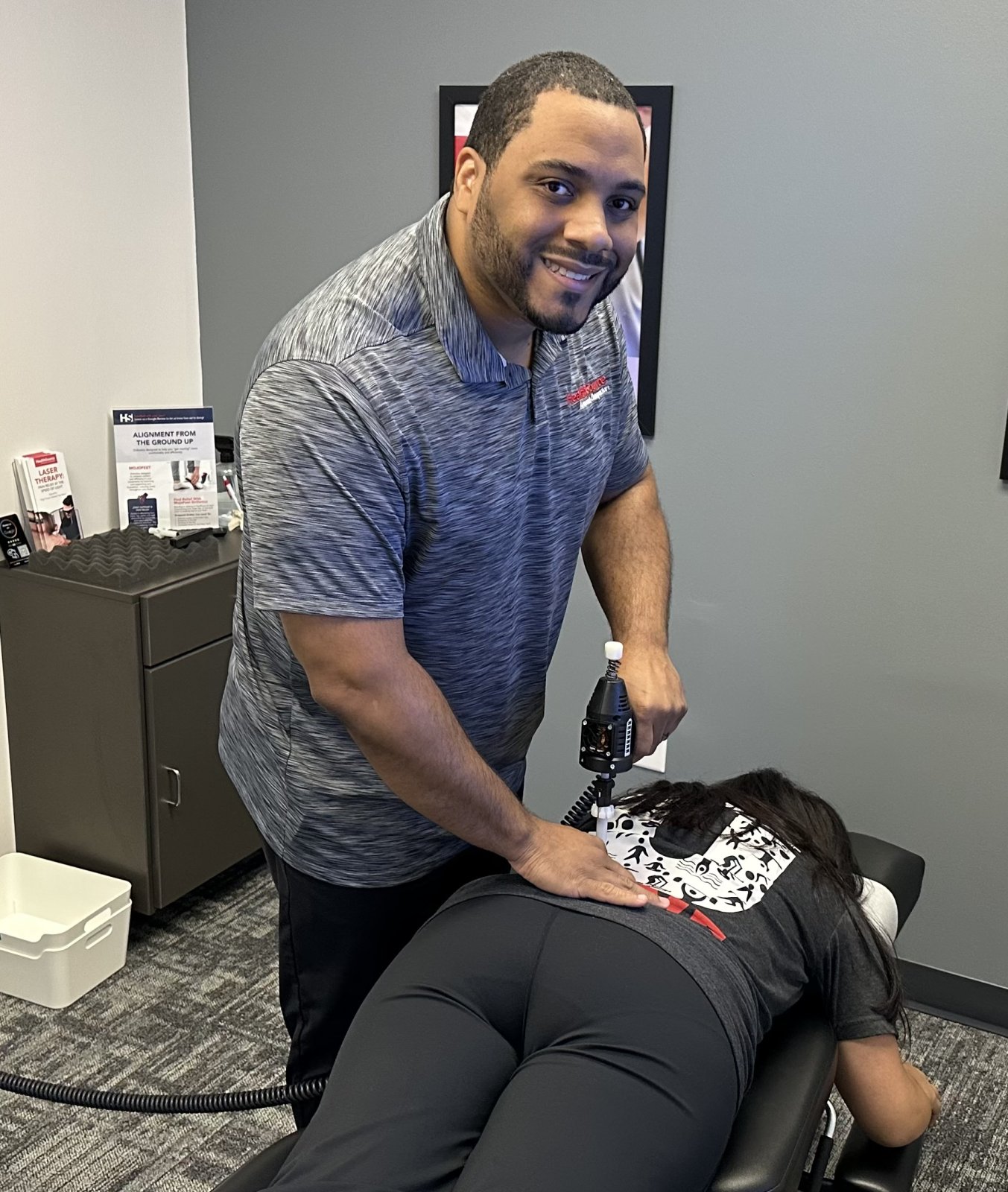
Dr. Everett Tucker, DC adjusting a patient
What to track in a symptom diary
Keep your diary for at least one week before your appointment. This gives you real data instead of guesses. Include details about your work, exercise, sleep position, and any recent activities that might have triggered the pain.
Track these specific patterns:
- Morning stiffness or pain upon waking
- Pain that worsens with sitting, standing, or bending
- Improvement with movement or rest
- Pain radiating into your leg or buttocks
- Associated numbness or tingling
The patterns you identify often point directly to the cause. Pain that gets worse when you bend forward suggests a disc issue. Pain that worsens with backward bending may indicate facet joint involvement. Radiating pain down your leg often signals nerve involvement or sciatica.
How pain location reveals its source
Where you feel pain tells a story. Lower back pain centered near the spine often indicates muscle strain or spinal structures. Pain on one side of your lower back suggests muscular imbalance or facet joint problems.
Pain that radiates into your buttock or leg is different, this pattern usually means a nerve is involved. The specific location where you feel this radiating pain can help narrow down which nerve root is affected.
Document exactly where you feel pain using simple terms. Draw it on a body diagram if that helps. This information becomes crucial when you meet with a healthcare provider.
Step 2: Recognize Back Pain Red Flags and When to Seek Urgent Care
Not all back pain requires emergency care, but some warning signs demand immediate attention. Knowing the difference protects you.
Seek urgent care immediately if you experience:
- Sudden severe pain following a fall or injury
- Loss of bowel or bladder control
- Numbness in the groin or buttocks area
- Severe weakness in one or both legs
- Fever combined with back pain
- Pain following trauma or accident
- Unexplained weight loss with back pain
These red flags suggest serious conditions like cauda equina syndrome, infection, or fracture. Don't wait or try home treatment when these symptoms appear.
Other warning signs that warrant prompt medical evaluation include progressive neurological symptoms, pain that doesn't improve after two weeks, or pain severe enough to disrupt sleep. If you've had cancer and develop new back pain, or if you're taking steroids long-term and develop back pain, these also need professional evaluation.
Most mechanical back pain, the common kind from muscle strain or poor posture, doesn't involve these red flags. But when in doubt, contact a healthcare provider rather than delay.
Step 3: Prepare for Your Medical History and Physical Examination
Your provider needs specific information to identify the root cause of your back pain. Come prepared.
What to tell your provider
Bring your symptom diary. Walk through the timeline of your pain starting with the first episode. Describe exactly what you were doing when it started. Was it a specific injury, gradual onset, or something you woke up with?
Mention any previous back problems or injuries. Tell them about your job, sitting at a desk all day creates different stresses than manual labor. Describe your exercise habits and any recent changes to your routine. Include information about your sleep position and mattress quality.
Be honest about stress levels and emotional factors. Research shows psychological stress and anxiety can intensify back pain perception and muscle tension. Mention any treatments you've already tried and whether they helped.
What the physical examination reveals
Your provider will perform specific tests to identify the source of your pain. They'll assess your range of motion, checking how far you can bend, twist, and move in different directions.
They'll palpate your spine, feeling for misalignments, muscle tension, or tender points. They'll test your reflexes and muscle strength, looking for nerve involvement. Special tests like the straight leg raise can indicate nerve root irritation or disc problems.
The physical examination combined with your medical history usually provides enough information to determine what's causing your pain. This is why clinical evaluation emphasizing history and physical examination before imaging is the standard approach, it's effective and avoids unnecessary radiation or cost.
Step 4: Understand How Doctors Diagnose Back Pain
How doctors diagnose back pain follows a logical progression. Understanding this process helps you know what to expect.
Your provider starts with your history and physical exam. They ask detailed questions about your symptoms, when they started, and what makes them better or worse. They perform the physical examination we described above.
If your symptoms suggest nerve involvement, they may perform additional neurological tests. They check reflexes, muscle strength, and sensation to pinpoint which nerve root is affected.
Only when the history and physical exam don't provide clear answers, or when red flags suggest serious pathology, does imaging become necessary. This approach saves time, money, and unnecessary radiation exposure.
Back Pain Diagnostic Tests and Their Limitations
Different tests provide different information. Knowing what each one shows, and what it doesn't, helps you understand your diagnosis.
When imaging is useful and when it isn't
X-rays show bone structure and alignment. They can reveal fractures, severe arthritis, or scoliosis. However, X-rays don't show soft tissue like muscles, discs, or nerves.
MRI provides detailed images of soft tissue including discs, nerves, and ligaments. It's excellent for identifying disc herniation, spinal stenosis, or nerve compression. The limitation? MRI often shows abnormalities that aren't causing your pain.
CT scans provide detailed bone images and are useful for evaluating fractures or specific spinal structures. They involve more radiation than X-rays.
The key principle: imaging should confirm what your clinical evaluation suggests, not replace it. A provider who orders imaging before taking your history and doing a physical exam is working backward.
Common Causes and Recurring Back Pain Causes
Understanding the most common sources of back pain helps you recognize what might be happening with yours.
Structural and mechanical causes
Muscle strain is the most common cause of acute back pain. Poor lifting technique, sudden movements, or overexertion can strain the large muscles supporting your spine.
Disc problems range from disc bulges to herniation. When the disc's outer layer tears and inner material leaks out, it can irritate nearby nerves.
Facet joint problems develop when the small joints connecting vertebrae become irritated or arthritic. This typically causes localized lower back pain that worsens with backward bending or twisting.
Spinal stenosis occurs when the space around the spinal cord narrows, often from arthritis or disc bulging.
Scoliosis, an abnormal sideways curve of the spine, can cause back pain though many people with scoliosis have no symptoms.
Non-spinal sources of back pain
Sometimes back pain originates elsewhere. Kidney problems can produce pain in the upper back or flank area. This pain typically has a different quality and location than mechanical back pain.
Hip problems frequently refer pain to the lower back. Tight hip flexors from prolonged sitting create tension that radiates to the lower back. Addressing hip mobility often relieves what seemed like back pain.
Abdominal issues occasionally present as back pain. Digestive problems, gynecological issues in women, or other internal conditions can produce back pain as a referred symptom.
Postural dysfunction from prolonged sitting creates muscular imbalance. The muscles in front of your body tighten while back muscles weaken, pulling your spine out of alignment.
Next Steps: From Diagnosis to Treatment
Once you've identified the cause of your back pain, treatment becomes targeted and effective.
For muscle strain, treatment focuses on reducing inflammation and restoring normal movement. This typically includes rest initially, followed by progressive movement and exercise.
For disc problems or nerve involvement, treatment depends on severity. Many cases improve with conservative care including physical therapy, anti-inflammatory approaches, and activity modification.
For structural issues like arthritis or stenosis, treatment aims to reduce pain and maintain function. This might include targeted exercise, activity modification, and sometimes advanced therapies.
The key to lasting relief is addressing what's actually causing your pain, not just managing symptoms.
Understanding how to find root cause of back pain puts you in control of your recovery.
Frequently Asked Questions
How do doctors determine the cause of back pain?
Doctors start with your medical history and a physical examination, which are sufficient to identify the cause in most cases. They ask about pain onset, location, severity, and activities that trigger or ease it. The physical examination includes movement tests, palpation of the spine, and neurological checks. If needed, imaging tests like X-rays or MRI scans provide additional information, though imaging findings don't always explain the pain. This structured approach helps narrow down whether your pain stems from muscle strain, disc problems, spinal stenosis, or another source.
What are the most common causes of low back pain?
The most frequent causes include muscle strains and sprains from lifting, poor posture, or sudden movements; herniated discs pressing on nerves; facet joint arthritis; and lumbar spinal stenosis (narrowing of the spinal canal). Traumatic injuries from falls or accidents can also cause acute pain. Many people experience mechanical pain—discomfort tied to specific movements or positions—without a single identifiable structural problem. Less commonly, back pain originates from non-spinal sources like kidney problems or referred pain from other organs. A qualified provider can help determine which cause applies to your situation.
What back pain red flags mean I need immediate medical attention?
Seek urgent care if you experience sudden severe pain after trauma or a fall; numbness or tingling in the genital area, buttocks, or legs; loss of bladder or bowel control; unexplained weight loss; fever with back pain; or pain that wakes you at night and doesn't improve with rest. These symptoms may indicate serious conditions like cauda equina syndrome, infection, or fracture that require prompt evaluation. Additionally, if your pain follows a recent accident or you have progressive weakness, contact a healthcare provider immediately rather than waiting for a routine appointment.
How long does it take to find out what's causing my back pain?
A thorough medical history and physical examination often identify the cause during your first visit. If imaging or additional diagnostic tests are needed, results typically arrive within a few days to a week. However, some cases—especially chronic or recurring back pain—may require follow-up visits and multiple assessments to pinpoint the exact source. Your provider will explain the timeline based on your specific symptoms. Many people benefit from starting conservative treatment like rest, movement modifications, and physical therapy while diagnostic results are pending, rather than waiting passively for a definitive answer.