 how-to
How to Fix Chronic Neck Pain: 7 Steps That Work
Table of Contents
- Why Your Neck Pain Won't Quit and What Actually Helps
- Step 1: Get an Accurate Diagnosis Before You Treat Anything
- Step 2: Start Non-Invasive Neck Pain Treatment First
- Step 3: Try Chiropractic Adjustments for Neck Pain Relief
- Step 4: Do Exercises for Chronic Neck Pain Relief at Home
- Step 5: Fix Your Workspace and Sleep Setup
- Step 6: Manage Stress and Protect Your Sleep
- Step 7: Build a Long-Term Maintenance Plan
- Frequently Asked Questions
Last Updated: September 13, 2026
Why Your Neck Pain Won't Quit and What Actually Helps
Chronic neck pain affects more than 519 people per 100,000 globally, and the burden keeps climbing, according to Orthorepair's 2026 prevalence data. If you have tried rest, painkillers, and waiting it out, you already know that approach rarely holds. This guide from HealthSource Chiropractic of Greensboro walks through a seven-step plan for how to fix chronic neck pain, moving from diagnosis to a maintenance routine you can sustain. Below, we'll show you exactly what works, what wastes your time, and why the order of these steps matters.
Chronic neck pain is discomfort in the cervical spine lasting three months or longer, often driven by muscle tension, poor posture, or joint dysfunction rather than a single injury. The good news: most cases respond to conservative, non-invasive care. The catch is that passive treatments alone rarely finish the job.
The Most Common Causes of Chronic Neck Pain
Cervicalgia usually traces back to sustained strain rather than one dramatic event. Hours hunched over a laptop, a pillow that forces your neck into an awkward angle, and repetitive lifting all load the same structures. Trigger points develop in the upper trapezius and levator scapulae, the cervical spine stiffens, and muscle spasms follow. Left alone, that cycle tightens until even turning your head hurts.
Why Passive Therapies Alone Fall Short
Massage and acupuncture can ease symptoms, but research suggests they work best as support, not the main event. Research suggests passive therapies work best as support, not the main event. That's not a knock on hands-on care. It's a warning against expecting relief without addressing the muscles and posture that caused the problem.
Step 1: Get an Accurate Diagnosis Before You Treat Anything
Before any treatment, a proper evaluation identifies what's actually driving the pain. That means a physical exam, a history of your symptoms, and, when neurological symptoms appear, diagnostic imaging such as an MRI or X-ray. If you have numbness, tingling, or weakness in your arm, that points toward cervical radiculopathy and needs prompt attention.
A common mistake is self-diagnosing from a search result and treating the wrong structure for months. At HealthSource Chiropractic of Greensboro, the first visit focuses on finding the root cause, not just the sore spot.
Step 2: Start Non-Invasive Neck Pain Treatment First
Conservative treatment is the evidence-based starting point for most chronic cases. Conservative treatment is the evidence-based starting point for most chronic cases, with options like exercise, massage, acupuncture, and mind-body practices. Physical therapy, manual manipulation, and targeted anti-inflammatories round out the first line.
Step 3: Try Chiropractic Adjustments for Neck Pain Relief
Chiropractic adjustments for neck pain target joint restriction and spinal alignment that keep muscles guarding. A 2025 systematic review named manual therapy a recommended first-line conservative intervention for neck pain, per Deuk Spine Institute's 2026 management overview. When paired with soft tissue work on the upper trapezius and scalene muscles, patients often regain range of motion they had quietly lost.
The thing nobody tells you about adjustments is that they work best as part of a plan, not as a one-off. Relief that lasts requires the strengthening work in the next step.
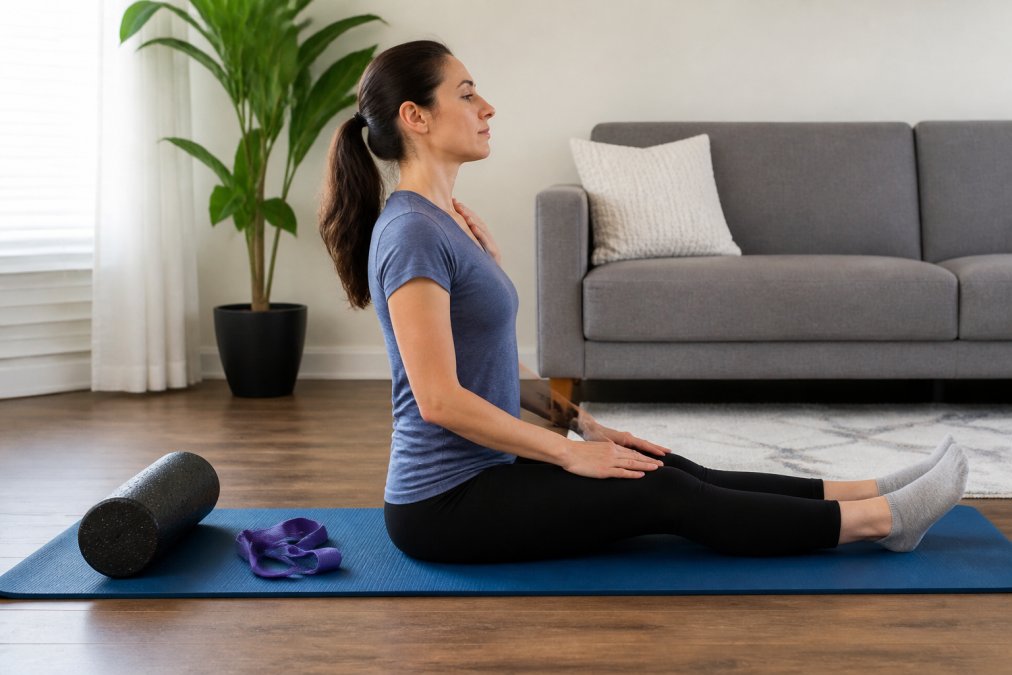
Step 4: Do Exercises for Chronic Neck Pain Relief at Home
Exercise therapy is the best-supported approach for managing chronic neck pain, according to research published through the National Institutes of Health. A daily routine of therapeutic exercises rebuilds the support structures your neck relies on. Keep it short and consistent:
- Chin tucks: 10 reps, hold 5 seconds each
- Shoulder blade squeezes: 10 reps, hold 5 seconds
- Slow neck rotations: 5 each direction, no forcing
- Upper trapezius stretch: 30 seconds per side
Step 5: Fix Your Workspace and Sleep Setup
Ergonomics decides whether your neck gets eight hours of recovery or eight hours of strain. Most articles tell you to "sit up straight" and stop there. What follows is the actual audit, work through it in order, because each step changes the geometry of the ones after it.
The Workspace Audit, in Order
1. Chair height first. Set the seat so your feet rest flat on the floor with knees at roughly 90 degrees and thighs parallel to the ground. If your feet dangle, use a footrest rather than lowering the chair, dropping the seat to reach the floor pulls your hips below your knees and rolls your pelvis back, which your neck then compensates for.
2. Then the desk. With the chair locked in, your forearms should rest at about 90 degrees with wrists straight and elbows close to your ribs. If the desk is too high, raise the chair and restore the footrest; if it's too low, you'll round forward to type.
3. Then the monitor. The top third of the screen should sit at or slightly below eye level, about an arm's length away. On a laptop, this is the step people skip: the screen and keyboard are permanently married, so you either crane your neck down to see it or reach up to type. A stand or a stack of books plus an external keyboard and mouse solves both at once. A common pattern is a laptop user whose chin is tucked toward the chest for six hours a day and who then wonders why chin tucks hurt.
4. Then the phone. Handheld screen time is the same problem in miniature. Bring the phone up to eye level instead of dropping your head to it; the neck load from a forward head position rises steeply as the head moves ahead of the shoulders.
5. Then movement. No setup is perfect if you hold it for hours. Stand or reset your posture every 45 minutes, the same interval as the movement break in Step 6.
Pillow Selection by Sleeping Position
At night, a pillow that keeps your cervical spine neutral matters as much as the mattress. The right choice depends entirely on how you sleep:
- Back sleepers: a thinner pillow, or a contour/cervical pillow with a lower center and raised side bolsters. The goal is a gentle inward curve, not a chin tipped toward the chest. A pillow that's too thick pushes your chin down all night.
- Side sleepers: the pillow must fill the gap between your ear and the mattress so your head doesn't tilt down or up. That usually means a thicker, firmer pillow, often a contoured memory foam or a pillow with a cutout for the shoulder. If your shoulder gets pinched, the pillow is too flat.
- Stomach sleepers: the hardest position to make neutral, because your head is rotated for hours. The best fix is to shift toward your side or back; if you can't, use a very thin pillow or none at all so your neck isn't cranked further.
Memory foam and cervical contour pillows hold their shape better than down or soft polyester fill, which collapses and lets your head drift. Whatever you choose, replace it when it stops springing back, a pillow that stays dented is no longer supporting anything.
Step 6: Manage Stress and Protect Your Sleep
The psychological side of chronic pain is real and often ignored, and it's the piece most treatment plans never address. Stress doesn't just make you feel tense; it drives measurable muscle activity in the exact structures that cause neck pain.
Why Stress Shows Up in Your Neck
When you're under sustained stress, your body holds a low-grade "ready" posture: shoulders creep up, the head drifts forward, and the upper trapezius and levator scapulae stay partially contracted for hours. That's the same sustained strain that causes cervicalgia in the first place. Over time, the muscles develop trigger points, blood flow drops, and the tissue becomes tender to the touch. The pain then becomes its own stressor, you brace against it, which tightens the muscles further. That loop is why a purely mechanical approach (stretch, adjust, repeat) can stall out.
Anxiety and low mood also lower your tolerance for pain, so the same input hurts more on a bad day than a good one. This isn't "in your head." It's a documented shift in how the nervous system processes signals, and it's why mind-body practices appear alongside exercise and manual therapy in mainstream treatment guidance.
What Actually Helps
The goal isn't to eliminate stress, it's to interrupt the tension cycle before it becomes a flare-up. A few approaches with the best evidence-to-effort ratio:
- Slow breathing: about six breaths per minute, with a longer exhale than inhale, for five to ten minutes. This nudges the nervous system out of the stress response and is easy to do at a desk.
- Progressive muscle relaxation: tense a muscle group for five seconds, then release for ten, working from your feet up to your jaw and neck. It teaches you what "relaxed" actually feels like in the muscles you've been holding.
- Mindfulness or meditation: even short daily sessions are associated with reduced pain intensity and improved function in chronic pain populations. The point is not to empty your mind but to notice tension earlier.
- Movement breaks: every 45 minutes, stand, roll your shoulders, and reset your posture. This is the same interval as the workspace reset in Step 5, the two habits reinforce each other.
Stress management and sleep hygiene aren't soft extras. They're load-bearing parts of chronic pain management, and they're the two levers most people never pull.
Sleep: The Other Half of the Equation
Poor sleep and neck pain feed each other. Pain makes it hard to fall asleep and stay asleep; short sleep lowers your pain threshold the next day, so the same neck stiffness hurts more. Breaking that cycle is as important as any stretch.
- Keep a consistent bedtime and wake time, including weekends. Your pain threshold responds to regularity, not just total hours.
- Wind down for 30-60 minutes before bed with dim light and no screens. Bright light late in the evening delays the sleep signal.
- Keep the bedroom cool, dark, and quiet, and use it only for sleep, not for scrolling or working.
- Limit caffeine after early afternoon and alcohol near bedtime. Alcohol can help you fall asleep but fragments sleep later, which is exactly when neck pain tends to wake people.
- If you wake with stiffness most mornings, treat that as data. It usually points to a pillow or sleep-position problem (see Step 5) rather than a random bad night.
If pain is consistently disrupting your sleep night after night, that's a reason to bring it up with a clinician, not to tough it out. Sleep and stress are not add-ons to a neck pain plan. They're part of the plan.
Step 7: Build a Long-Term Maintenance Plan
Lasting relief comes from maintenance, not a finish line. The global burden of neck pain is projected to keep rising through 2050, per a 2025 study in the NIH's PMC archive, which means prevention deserves the same effort as treatment. A workable plan looks like this:
| Frequency | Action | Purpose |
|---|---|---|
| Daily | Home exercises | Maintain strength and mobility |
| Every 45 min | Posture reset at desk | Reduce sustained strain |
| Weekly | Stress and sleep review | Catch flare-ups early |
| As needed | Professional evaluation | Address recurring stiffness |
HealthSource Chiropractic of Greensboro builds these plans around Progressive Rehab® and functional exercise, so your maintenance matches your specific problem rather than a generic handout.
Chronic neck pain rarely resolves on its own, and guessing at treatments can cost you months of unnecessary discomfort. A structured plan, starting with an accurate diagnosis and built on active care, gives you the best shot at lasting relief. HealthSource Chiropractic of Greensboro offers personalized, non-invasive treatment plans that combine chiropractic adjustments with Progressive Rehab®, functional exercise, and advanced therapies like spinal decompression and class IV laser treatment. Get started with HealthSource Chiropractic of Greensboro and build a plan that targets the root cause of your pain.
Frequently Asked Questions
Can chronic neck pain be fixed without surgery?
In many cases, yes. Research identifies exercise therapy as an evidence-based approach for managing chronic neck pain, and nonpharmacologic options like exercise, massage, and acupuncture are effective. Manual therapy is also recommended as a first-line conservative intervention. Surgery is typically reserved for specific structural problems or nerve compression that does not improve with conservative care. A qualified provider can assess whether non-invasive neck pain treatment is right for you.
What is the best exercise to help with neck pain?
There is no single best exercise, but research points to therapeutic exercises that improve range of motion, strengthen deep neck flexors, and address posture. Exercise therapy is considered a strong evidence-based approach for chronic neck pain. Common exercises include chin tucks, shoulder blade squeezes, and gentle neck rotations. A physical therapist or chiropractor can tailor exercises for chronic neck pain relief to your specific condition and ensure you perform them safely.
How do chiropractic adjustments help with chronic neck tension?
Chiropractic adjustments for neck pain use precise manual manipulation to restore spinal alignment and reduce muscle tension and trigger points. Manual therapy is identified as a recommended first-line conservative intervention for neck pain. Manual therapy combined with soft tissue work to the upper trapezius, levator scapulae, and scalene muscles can improve management of neck pain. Adjustments are often paired with Progressive Rehab® and functional exercise for lasting results.
When should you see a professional for persistent neck pain?
See a professional if neck pain lasts more than a few weeks, keeps returning, or interferes with daily activities. Seek immediate care if you have neurological symptoms such as numbness, weakness, or tingling in your arms or hands, or if pain follows an accident or injury. A chiropractor or physician can perform diagnostic imaging if needed and recommend an appropriate treatment plan.