 blog
Is Spinal Decompression Safe for Seniors?
Table of Contents
- What Spinal Decompression Therapy Is and How It Works
- Safety Profile for Older Adults
- Non-Surgical Spinal Decompression Risks for Seniors
- Spinal Decompression Contraindications You Should Know
- Spinal Decompression with Osteoporosis: Special Considerations
- How Long Spinal Decompression Treatment Duration Typically Takes
- Surgical Decompression vs. Nonsurgical Therapy for Older Adults
- Questions to Ask Your Healthcare Provider Before Starting Treatment
- Frequently Asked Questions
Last Updated: October 7, 2026
What Spinal Decompression Therapy Is and How It Works
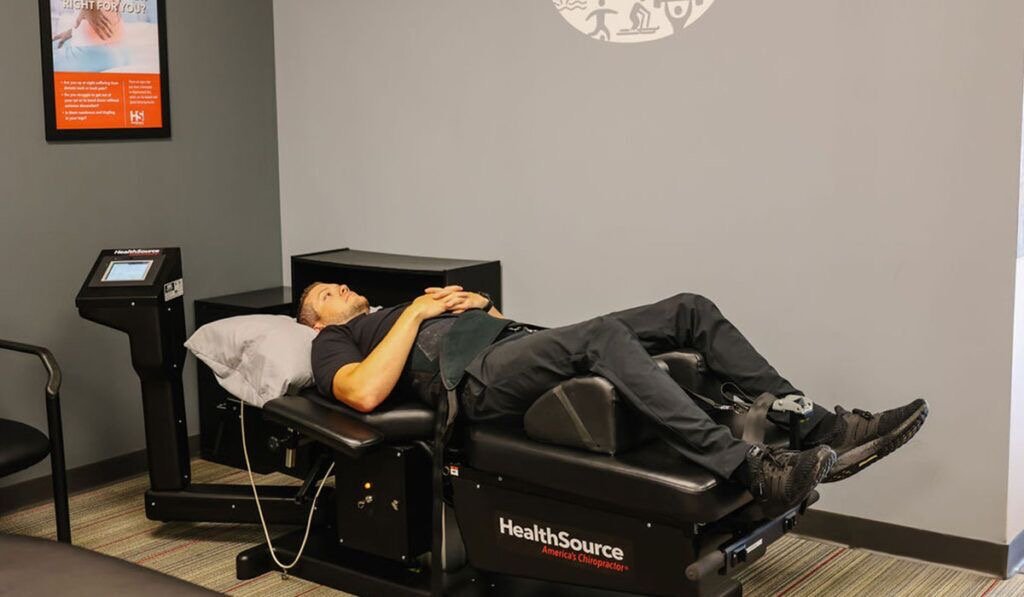
Spinal decompression is a non-invasive treatment that gently stretches your spine to reduce pressure on compressed nerves and discs.
The therapy works by separating spinal vertebrae through a motorized table or device. This separation reduces the load on your discs and nerves. When pressure decreases, inflammation often subsides, and nerve function improves.
How the treatment feels:
- You lie on a decompression table fully clothed
- The table gently stretches your spine in a specific direction
- Sessions typically last 20-30 minutes
- Most people feel minimal discomfort during treatment
Nonsurgical spinal decompression differs fundamentally from surgical decompression. Surgery (like laminectomy or microdiscectomy) physically removes bone or disc material. Nonsurgical therapy simply creates more space without cutting tissue.
Safety Profile for Older Adults
Is spinal decompression safe for seniors? Research shows it can be safe and effective for many older adults. A study published in the Journal of Neurosurgery: Spine found that minimally invasive decompressive surgery in patients older than 75 was safe and effective, with no increased risk compared to younger patients.
However, safety depends on individual health factors, not age alone. Older adults often have multiple conditions, osteoporosis, arthritis, previous surgeries, that affect treatment suitability. A qualified healthcare provider must evaluate your specific situation.
Key safety considerations for seniors:
- Bone density and structural integrity matter more than age
- Existing spinal conditions require careful assessment
- Medical history (heart conditions, blood thinners) influences treatment
- Some seniors tolerate the treatment better than younger patients
Many older adults experience relief without serious complications. But "generally safe" is not the same as "safe for you." That's why a thorough evaluation is essential before starting treatment.
Non-Surgical Spinal Decompression Risks for Seniors
All treatments carry risks, and non-surgical spinal decompression risks for seniors deserve honest discussion. While serious complications are rare, they do occur.
Documented risks include:
- Temporary increased soreness or muscle spasms after treatment
- Worsening of symptoms in some patients (documented in case studies)
- Disc herniation in rare cases
- Nerve irritation or tingling
A case study published in PubMed Central noted that adverse events can occur with nonsurgical spinal decompression, though the exact frequency isn't well-established in published research. Most adverse effects are mild and temporary.
Seniors face slightly different risk patterns than younger patients:
- Fragile skin may show bruising more easily
- Recovery from soreness may take longer
- Underlying conditions can complicate healing
- Medication interactions may affect treatment response
The risk profile is generally favorable compared to surgery. But it's not zero risk. Your provider should discuss what to watch for and when to stop treatment if symptoms worsen.
Spinal Decompression Contraindications You Should Know
Spinal decompression contraindications are conditions that make treatment unsafe or require modification. They matter more for seniors because the prevalence of these conditions rises sharply with age.
Contraindications fall into two categories: absolute (do not treat) and relative (treat only with modification and close monitoring).
Absolute contraindications, avoid treatment:
- Active spinal fracture or unstable vertebral compression fracture
- Spinal malignancy, metastasis, or primary bone tumor
- Cauda equina syndrome (bowel/bladder dysfunction, saddle anesthesia), this is a surgical emergency
- Severe spinal instability or spondylolisthesis with neurologic deficit
- Abdominal or thoracic aortic aneurysm (traction forces can stress the vessel wall)
- Recent spinal surgery (typically within 6-12 weeks, per surgeon's guidance)
- Implanted spinal cord stimulator or intrathecal pump leads in the treatment zone
- Severe osteoporosis with prior fragility fracture (see next section)
Relative contraindications, modify or monitor closely:
- Mild-to-moderate osteoporosis (reduce traction force, shorter sessions)
- Anticoagulant or antiplatelet therapy (warfarin, apixaban, rivaroxaban, clopidogrel), bruising and hematoma risk
- Uncontrolled hypertension or recent cardiac event
- Pacemaker or defibrillator (device may be affected by motorized table motors, check with the device manufacturer)
- Severe spinal stenosis with progressive neurologic symptoms
- Pregnancy (not a senior concern, but listed for completeness)
- Hiatal hernia or severe GERD (table positioning can worsen reflux)
- Morbid obesity with respiratory compromise
Why these matter more with age:
- Bone fragility: A vertebral compression fracture can occur with minimal force in osteoporotic bone.
- Polypharmacy: Blood thinners, corticosteroids, and bisphosphonates all change tissue response and healing.
- Cardiovascular load: Lying prone or supine for 20-30 minutes can be poorly tolerated with heart failure or severe COPD.
- Implanted devices: Pacemakers, defibrillators, and spinal cord stimulators are more common in older adults.
- Prior spinal surgery: Fusion hardware, laminectomy sites, and scar tissue change how traction distributes force.
Spinal Decompression with Osteoporosis: Special Considerations
Spinal decompression with osteoporosis is the single most common safety question for older adults, and the answer is more nuanced than most sources admit. Osteoporosis, low bone mineral density, affects roughly 1 in 5 women and 1 in 20 men over age 50, and prevalence climbs steeply after 65.
The mechanism of concern: Traction pulls vertebrae apart. In healthy bone, this is well tolerated. In osteoporotic bone, the vertebral body, especially the anterior cortex, can fail under sustained load, producing a compression fracture.
DEXA T-score guidance (World Health Organization criteria):
| T-score | Classification | General Decompression Guidance |
|---|---|---|
| −1.0 or above | Normal | Standard protocol typically appropriate |
| −1.1 to −2.4 | Osteopenia | Often appropriate with reduced force and monitoring |
| −2.5 to −3.4 | Osteoporosis | Modified protocol only, or consider alternatives |
| −3.5 or below | Severe osteoporosis | Generally avoid; consider alternative therapies |
| Any T-score with prior fragility fracture | Severe/established | Avoid without specialist clearance |
These are general ranges. A clinician may adjust based on FRAX score, fracture history, and the specific spinal level being treated.
Medications that change the picture:
- Bisphosphonates (alendronate, risedronate, zoledronic acid): reduce fracture risk but do not restore normal bone architecture; treatment may be appropriate once therapy is established.
- Corticosteroids (prednisone, dexamethasone): accelerate bone loss and impair healing, a relative contraindication.
- Anticoagulants: increase bruising and hematoma risk at contact points.
- Teriparatide (Forteo): anabolic therapy that may improve candidacy over time.
What to ask before treatment:
- When was my last DEXA scan, and what was my T-score at the lumbar spine and hip?
- Have I had any fragility fracture (a fall from standing height or less)?
- What traction force will be used, and how does it compare to my bone density?
- Will the protocol be modified for my bone status?
- What is the plan if I develop new back pain during the treatment course?
Alternatives when osteoporosis rules out decompression:
- Physical therapy focused on core stabilization and fall prevention
- Low-impact exercise (swimming, stationary cycling)
- Pharmacologic management of osteoporosis (bisphosphonates, teriparatide, denosumab)
- Pain management options: topical analgesics, acetaminophen, judicious NSAID use
- Epidural steroid injections for radicular symptoms
- Surgical consultation if neurologic deficits progress
How Long Spinal Decompression Treatment Duration Typically Takes
Most seniors wonder: How long spinal decompression treatment duration takes before they feel better. The answer depends on your condition, age, and how your body responds.
Typical treatment timeline:
- Initial phase: 2-4 weeks of sessions (usually 3-5 per week)
- Assessment period: 4-6 weeks to evaluate progress
- Continuation phase: 6-12 weeks total for most patients
- Maintenance: occasional sessions to sustain relief
Each session lasts 20-30 minutes, but you'll spend longer at the clinic for intake and discussion. Most people can return to normal activities immediately after treatment.
Early improvement often appears within 2-3 weeks. But full benefit may take 8-12 weeks as inflammation decreases and tissue heals. Patience matters. Stopping treatment too early prevents maximum benefit.
Seniors sometimes progress more slowly than younger patients. This isn't failure, it's normal. Older tissues heal at their own pace. Consistency matters more than speed.
Surgical Decompression vs. Nonsurgical Therapy for Older Adults
Seniors facing spine problems often hear: "You might need surgery." Understanding the difference between surgical and nonsurgical options helps you make informed decisions.
Surgical decompression (laminectomy, microdiscectomy) removes bone or disc material to relieve nerve pressure. It's permanent, invasive, and carries standard surgical risks: infection, bleeding, anesthesia complications, longer recovery.
Nonsurgical decompression uses traction to create space without surgery. It's reversible, non-invasive, and recovery is minimal.
Comparison for older adults:
| Factor | Surgical | Nonsurgical |
|---|---|---|
| Invasiveness | High | None |
| Recovery Time | 6-12 weeks | Immediate |
| Anesthesia Risk | Yes | No |
| Permanence | Permanent | Temporary without maintenance |
| Cost Factors | Higher initial cost | Lower per session |
| Success Rate | Varies | 60-70% (varies) |
| Best For Seniors | Limited mobility, severe cases | Most cases, especially mild-moderate |
Surgery isn't always wrong for seniors. Some conditions, severe stenosis with neurological symptoms, unstable fractures, genuinely require surgery.
At HealthSource Chiropractic of Greensboro, we focus on conservative treatment.
Questions to Ask Your Healthcare Provider Before Starting Treatment
Before beginning spinal decompression therapy, ask your provider these critical questions. Clear answers help you decide whether treatment is right for you.
About your condition:
- What exactly is causing my pain? (specific diagnosis, not just "back pain")
- Why do you recommend decompression for my condition?
- What are realistic outcomes for someone my age with my condition?
About treatment specifics:
- How many sessions will I need? What's the timeline?
- What should I expect to feel during and after treatment?
- What signs mean the treatment isn't working?
- Can I stop anytime if I'm uncomfortable?
About safety:
- Are there any contraindications in my medical history?
- How do my medications interact with this treatment?
- What adverse effects should I watch for?
- What's your experience treating patients my age?
About alternatives:
- Why is decompression better than physical therapy for me?
- Are there other options I should consider first?
- If this doesn't work, what's next?
About your provider:
- What training and credentials do you have in decompression therapy?
- How many seniors have you treated with this condition?
- What's your success rate?
Don't accept vague answers. If your provider can't explain clearly, that's a red flag. You deserve detailed, honest information to make an informed choice.
Spinal decompression can offer meaningful relief for many seniors, but it's not universal. Your age alone doesn't determine safety, your specific health situation does. At HealthSource Chiropractic of Greensboro, we evaluate each patient thoroughly, discuss realistic expectations, and create personalized treatment plans that address your unique needs.
Frequently Asked Questions
Is non-surgical spinal decompression safe for seniors?
Research indicates that nonsurgical spinal decompression can be safe for older adults when properly evaluated and monitored. However, safety depends on individual health status, medical history, and whether contraindications are present. A qualified healthcare provider must evaluate your specific condition before treatment begins.
What are the main risks of non-surgical spinal decompression therapy for older adults?
Potential side effects include increased soreness, muscle spasms, and temporary increased pain. Risks are higher for seniors with spinal fractures, severe osteoporosis, spinal instability, or recent spinal surgery. Conditions like tumors and certain medical comorbidities may also increase risk. Discuss your medical history thoroughly with your provider to identify individual risk factors.
Can seniors with osteoporosis safely undergo spinal decompression?
Severe osteoporosis is a contraindication for spinal decompression therapy because the traction forces involved can increase fracture risk in weakened bone. However, seniors with mild-to-moderate osteoporosis may be candidates depending on bone density measurements and overall health. Your provider should order appropriate imaging and bone density testing before treatment. If you have osteoporosis, disclose this during your evaluation so your healthcare team can determine whether decompression is appropriate or if alternative treatments better suit your needs.
How long does spinal decompression treatment typically take?
Treatment duration varies based on your condition and response to therapy. Most treatment plans involve multiple sessions over several weeks to months. Sessions typically last 20-45 minutes on the decompression table, with additional time for evaluation and other therapies. Your provider will develop a personalized treatment plan and discuss expected duration during your initial consultation.