 how-to
Natural Relief for Tension Headaches From Posture
Table of Contents
- Understanding Tension Headaches and Posture Connection
- Neck Stretches for Tension Headaches: A Step-by-Step Routine
- Posture Exercises for Neck Pain and Headache Prevention
- Desk Setup to Prevent Headaches and Reduce Muscle Tension
- Tension Headache Self-Care: Heat, Cold, and Daily Habits
- Yoga and Gentle Movement for Posture-Related Relief
- When to Seek Professional Care for Posture-Related Headaches
- Frequently Asked Questions
Last Updated: October 17, 2026
Understanding Tension Headaches and Posture Connection
Tension headaches are the most common headache type, often triggered by stress, neck and shoulder tightness, and poor posture, and natural relief for tension headaches from posture is achievable through targeted strategies. When your head sits forward of your shoulders or your upper back rounds, neck muscles work overtime, creating band-like pressure around your head.
Natural relief for tension headaches from posture starts with understanding how your alignment affects these muscles.
Many respond well to targeted stretching, posture correction, and self-care habits, small changes to how you sit, move, and care for your neck muscles make a real difference.
Research shows that non-pharmacological approaches, including postural education, stretching, and muscle-relaxation training, can help manage tension-type headaches Physical Therapy in Tension-Type Headache review. The key is consistency and targeting the right muscles.
Neck Stretches for Tension Headaches: A Step-by-Step Routine
A simple stretching routine done twice daily can ease neck tension and reduce headache frequency. Hold each stretch 20-30 seconds and repeat 2-3 times per side.
Gentle Neck Flexion Stretch
- Sit upright with feet flat on the floor.
- Slowly lower your chin toward your chest.
- Feel the gentle stretch along the back of your neck.
- Don't force it, go only as far as feels comfortable.
- Hold 20-30 seconds and release.
Repeat 2-3 times, especially after long sitting periods, this eases tension that builds when you lean forward at your desk.
Lateral Neck Stretch
- Sit with good posture, shoulders relaxed.
- Slowly tilt your right ear toward your right shoulder.
- Feel a gentle stretch on the left side of your neck.
- Don't pull your head down, let gravity do the work.
- Hold 20-30 seconds, then repeat on the other side.
Perform 2-3 times per side, morning and evening, to prevent the side-to-side tension that builds from looking at screens.
Shoulder Shrug and Release
- Lift both shoulders toward your ears.
- Hold 2-3 seconds.
- Drop them suddenly and relax completely.
- Repeat 10 times slowly and deliberately.
This releases the trap muscles that lock up during stress, do it whenever tension builds in your shoulders.
Posture Exercises for Neck Pain and Headache Prevention
Strengthening exercises train your neck and upper back to support proper posture, weak muscles can't hold your head in alignment, so tension builds. These take 5-10 minutes and target the muscles that prevent forward head posture.
Chin Tucks for Neck Alignment
- Sit or stand with shoulders relaxed.
- Keep your eyes forward.
- Gently draw your chin straight back, as if making a double chin.
- Don't tilt your head up or down, move only backward.
- Hold 2-3 seconds and release.
- Repeat 10-15 times, 2-3 times per day.
Chin tucks retrain your neck to stay in the correct position. Do them throughout your day, especially after noticing yourself slumping forward.
Scapular Squeezes and Upper Back Activation
- Sit upright with arms at your sides.
- Squeeze your shoulder blades together as if pinching a pencil between them.
- Hold 2-3 seconds.
- Release and relax.
- Repeat 12-15 times, 2-3 times per day.
Scapular squeezes build the upper back strength needed to maintain good posture. Strong shoulder blades pull your shoulders back naturally, taking strain off your neck.
Desk Setup to Prevent Headaches and Reduce Muscle Tension
Your workstation is where posture-related headaches are born. If your monitor, keyboard, or chair is off by even a couple of inches, your neck muscles work against you all day. The fix: measurable checks you can run in about ten minutes.
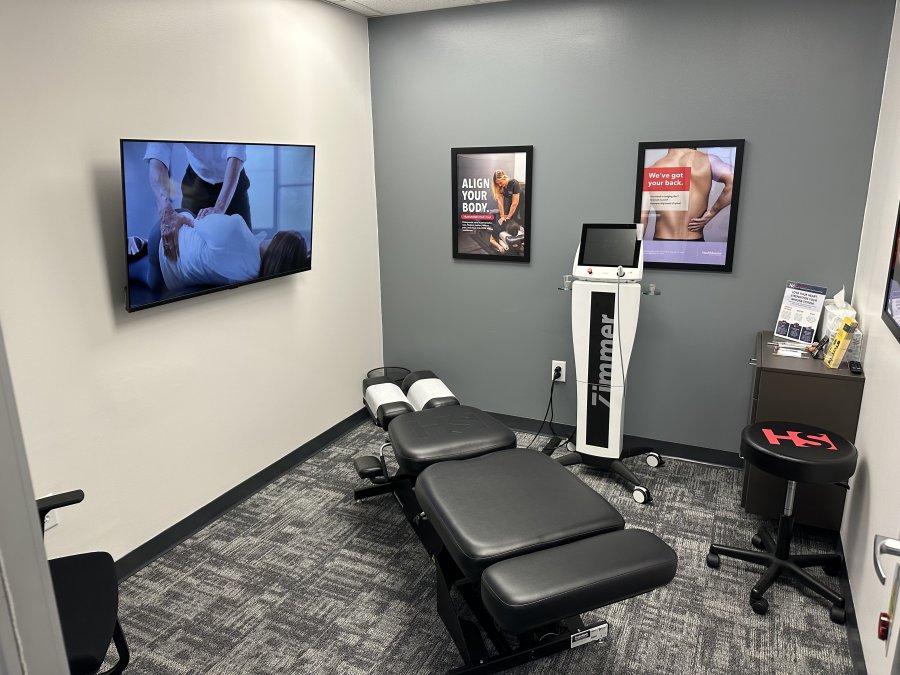
Run These Five Checks in Order
**1.
2. Keyboard and mouse position. Elbows at roughly 90 degrees, forearms parallel to the floor or angled slightly down, wrists neutral.
**3.
4. Screen and phone angle. A laptop flat on a desk forces your chin down and upper back to round.
5. Movement breaks. Even ideal posture becomes a problem when held for hours.
Troubleshooting Common Setup Problems
- Headaches build by mid-afternoon. Usually a monitor-height or break-frequency problem. Recheck the top-third rule and shorten your break interval.
- One-sided neck or shoulder ache. Often the mouse arm reaching too far, or a phone cradled between ear and shoulder. Move the mouse closer and use speakerphone or a headset.
- Morning headaches before you even sit down. Look at your sleep setup first, pillow height and sleeping position, then revisit the desk.
- Tension returns within an hour of adjusting. The setup may be fine but the muscles are still weak. Pair the ergonomic fixes with the chin tucks and scapular squeezes in the exercise section.
Many office workers notice headache improvement within two to three weeks of correcting their setup, provided they also move regularly and keep stretching. The changes are inexpensive, a monitor stand, a footrest, a lumbar cushion, but the payoff in daily comfort is significant.
Tension Headache Self-Care: Heat, Cold, and Daily Habits
Self-care habits support your stretching and exercise routine. Heat relaxes tight muscles, cold reduces inflammation, and good sleep and hydration help your neck recover.
Heat therapy: Apply a heating pad or take a warm shower for 15-20 minutes, especially in the evening or after work. Heat works best for muscle tension and stiffness; moist heat penetrates deeper than dry heat.
Cold therapy: Ice reduces inflammation if your headache comes with swelling or acute pain.
Sleep and pillow position: Your neck should stay neutral while you sleep, not bent forward or backward. For those with persistent alignment issues, Custom and Prefabricated Orthotics can provide additional support tailored to your needs.
Hydration: Dehydration triggers headaches and tightens muscles. Drink water consistently, at least 8 glasses daily, more if you exercise or live in a dry climate.
Stress management: Stress tightens the neck and shoulder muscles automatically. Meditation, breathing exercises, and relaxation techniques ease this tension.
Yoga and Gentle Movement for Posture-Related Relief
Yoga combines stretching, strengthening, and breathing to directly address posture-related tension. You don't need to be flexible or experienced, gentle poses release tension and retrain alignment.
Child's Pose for Neck and Shoulder Release
- Kneel with your big toes touching and knees apart.
- Sit your hips back toward your heels.
- Lower your forehead to the floor or a pillow.
- Let your arms rest alongside your body, palms up.
- Breathe slowly and deeply for 1-2 minutes.
Child's pose stretches your upper back and shoulders while taking pressure off your neck, and it calms the nervous system to reduce stress-related tension.
Cat-Cow Stretch for Spinal Mobility
- Start on your hands and knees (tabletop position).
- Align wrists under shoulders and knees under hips.
- Cow: Drop your belly, lift your gaze, and arch your back gently.
- Cat: Round your spine, tuck your chin, and draw your belly in.
- Flow between the two 8-10 times, moving with your breath.
Cat-cow improves spinal mobility and teaches controlled movement. Do it every morning to prevent the stiffness that triggers headaches.
Evidence for some natural approaches shows mixed results, so combining multiple methods works better than relying on one EBSCO Natural Treatments for Tension Headaches. Yoga paired with stretching, posture work, and self-care habits creates the best outcomes.
When to Seek Professional Care for Posture-Related Headaches
Most tension headaches respond well to home care and posture correction, but posture-related tension can resemble other headache patterns, and some symptoms need prompt attention. Use this as a triage guide, not a diagnosis.
Red Flags: Get Urgent Care Now
Call 911 or go to an emergency department if a headache comes with any of the following:
- Sudden, severe onset, a headache that peaks within seconds to minutes, often described as the worst of your life.
- Fever with a stiff neck, rash, confusion, or sensitivity to light.
- Weakness, numbness, trouble speaking, vision loss, or difficulty walking.
- A headache after a head injury or fall.
- A new headache during pregnancy or shortly after delivery.
- A headache that keeps worsening over hours despite rest and over-the-counter pain relief.
These signs can point to conditions that need emergency assessment. Do not wait to see whether home care helps.
See a Healthcare Provider Soon (Within Days)
Book an appointment with a physician, chiropractor, or physical therapist if:
- Your headaches are new or different from your usual pattern, different location, different quality, or a new accompanying symptom.
- Headaches worsen despite two to three weeks of consistent home care (stretching, desk setup changes, sleep and hydration habits).
- You need pain relievers more than two or three days a week, or you are taking them more often than the label allows.
- The headaches interfere with work, sleep, or daily activities on a regular basis.
- You notice neck stiffness that does not ease with gentle movement, or pain that radiates down an arm with numbness or tingling.
- You have a history of cancer, immune suppression, or a bleeding disorder, which can change how a new headache should be evaluated.
What a Professional Assessment Typically Involves
A clinician usually starts with a history: when headaches occur, what makes them better or worse, medication frequency, and your work and sleep setup.
Treatment typically combines manual therapy such as Chiropractic Adjustment, targeted exercise, and ergonomic coaching rather than a single intervention. If a provider recommends imaging or referral, ask what finding they're looking for and how it would change the plan.
How to Tell Posture-Related Tension From Other Patterns
Posture-related tension headaches tend to be dull, band-like pressure on both sides, worse later in the day or after long sitting, and usually ease with movement, stretching, or a change in position. Migraine is more often one-sided, throbbing, and accompanied by nausea or light sensitivity.
Professional care becomes especially valuable when headaches persist despite consistent home efforts. A trained provider can spot alignment and muscle patterns you might miss and adjust the plan as you improve.
Frequently Asked Questions
Can poor posture really cause tension headaches?
Yes. Poor posture, especially forward head position common with desk work, places strain on neck and shoulder muscles. This sustained muscle tension can trigger tension headaches at the base of the skull, temples, and across the forehead. Correcting posture through exercises, stretches, and workstation adjustments helps reduce this muscle tension and headache frequency.
What's the fastest way to get relief from a tension headache naturally?
Immediate relief often comes from heat therapy (warm compress or hot shower), gentle neck stretches, and massage at the base of the skull and temples. Hydration, relaxation techniques, and movement breaks also help. For lasting relief, addressing the underlying posture problem through daily stretches and exercises prevents headaches from returning.
How often should I do posture exercises for neck pain if I work at a desk?
Perform gentle stretches and exercises 2-3 times daily, especially during work breaks. Take a movement break every 30-60 minutes to stand, stretch, and reset your posture. Consistency matters more than intensity. A professional can create a personalized routine based on your specific posture and pain patterns.
What should I do if stretches and posture changes don't relieve my tension headaches?
If self-care and posture adjustments don't improve symptoms after 2-3 weeks, or if headaches worsen or change in character, consult a healthcare professional. Persistent tension headaches may benefit from chiropractic evaluation, which can identify structural or alignment issues and provide targeted treatment like spinal adjustments or functional rehabilitation.