 how-to
How Long Chiropractic Treatment Takes to Work
Table of Contents
- How Long Does Chiropractic Treatment Take to Work?
- Realistic Timeline: What the Research Shows
- How Long After a Chiropractic Adjustment Do You Feel Better?
- Why Treatment Timelines Vary: Key Factors That Affect Recovery
- How Many Chiropractic Visits Does It Take to Feel Better?
- Signs a Chiropractic Adjustment Is Working
- Chiropractic Adjustment Soreness: How Long Does It Last?
- When to Reassess Your Treatment Plan and Adjust Your Expectations
- Frequently Asked Questions
Last Updated: October 15, 2026
How Long Does Chiropractic Treatment Take to Work?
When you're dealing with neck pain or back pain, you want relief fast. The truth is that chiropractic treatment timelines vary widely. Some people notice improvement within days.
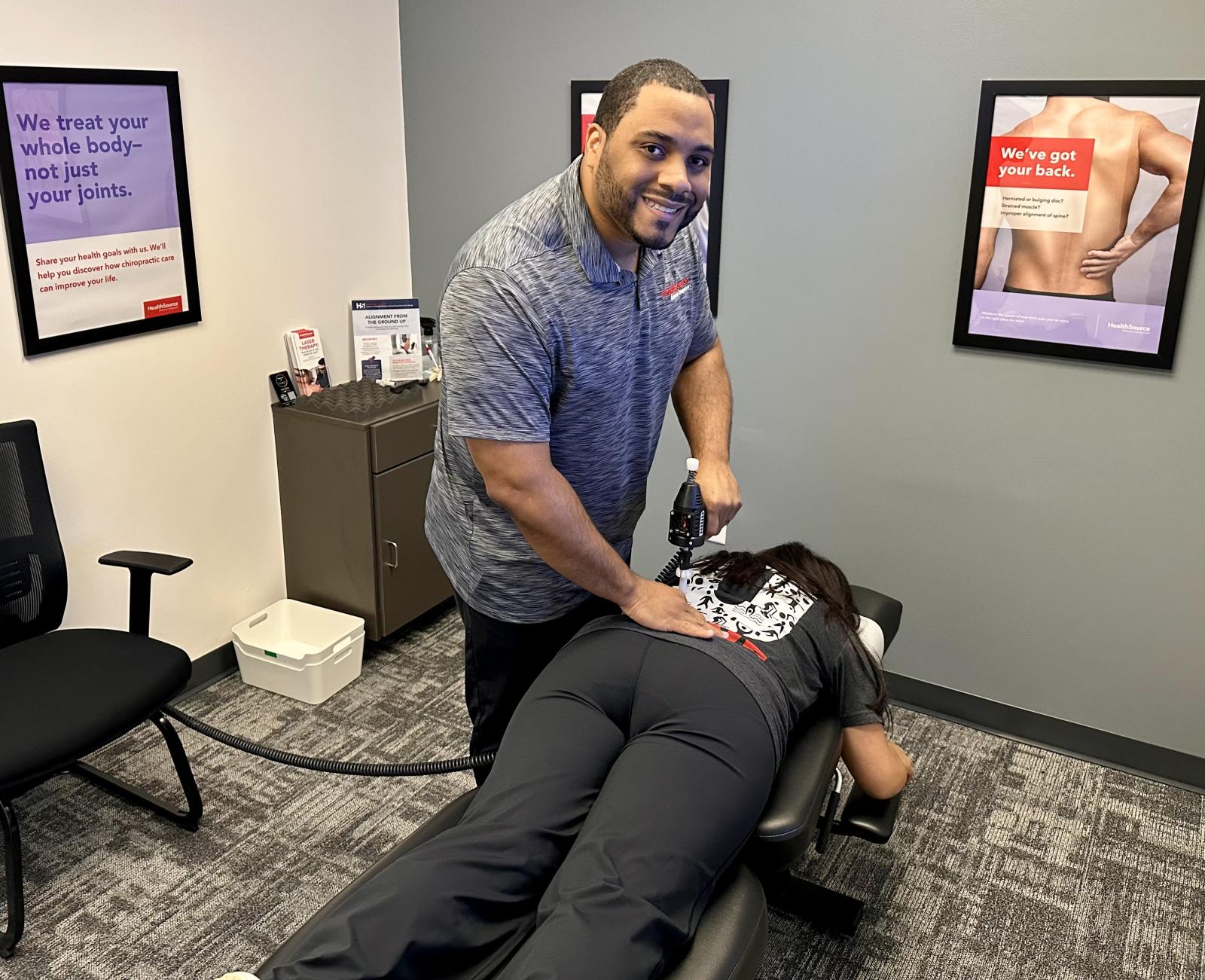
Dr. Everett Tucker, DC in the treatment room
At HealthSource Chiropractic of Greensboro, we understand this frustration. Our team works with patients every day who ask the same question: how long until I actually feel better?
Research shows that chiropractic adjustment delivers modest improvements in pain and function for up to six weeks, with most patients experiencing transient minor musculoskeletal soreness after treatment.
Realistic Timeline: What the Research Shows
Most people want a single number. There isn't one, but the research does give us realistic ranges you can plan around.
According to American College of Physicians low back pain guideline, spinal manipulative therapy produces modest improvements in pain and function for acute and chronic low back pain, with the strongest evidence for short-term relief.
Here is how those findings translate into practical expectations by complaint:
- Acute low back strain (recent injury, no nerve involvement): Many patients notice meaningful pain reduction within the first 1-2 weeks and return to normal activity in roughly 2-4 weeks with consistent care and home exercise.
- Chronic low back pain (present 3+ months): Improvement tends to be gradual. A common pattern is modest relief in the first 2-3 weeks, clearer functional gains by weeks 4-8, and continued slow progress through 8-12 weeks.
- Neck pain and tension headaches: Short-term relief often appears within the first few visits. Lasting change usually requires several weeks of care plus attention to posture, workstation setup, and daily habits.
- Disc-related pain or radiating symptoms: These tend to respond more slowly. Relief may take several weeks, and full functional recovery can take longer because disc and nerve tissue heal on their own schedule.
A realistic way to read your own timeline:
- Days 1-7: Possible initial soreness, then early changes in pain or mobility. Some patients feel nothing yet, which is normal.
- Weeks 2-3: Many patients report noticeable pain reduction and easier movement.
- Weeks 4-6: Functional improvements, such as sitting, bending, or sleeping more comfortably, become clearer.
- Weeks 7-12: For chronic conditions, progress continues but often slows. This is when reassessment matters most.
The honest caveat: not every patient responds to chiropractic care, and not every condition is a good fit.
How Long After a Chiropractic Adjustment Do You Feel Better?
Most patients feel some relief within hours or days of their first adjustment. But "relief" doesn't always mean complete pain elimination.
Short-term relief typically appears quickly. Your adjustment realigns vertebrae and reduces nerve pressure. This can ease pain almost immediately for some people.
However, lasting relief takes longer. A single adjustment addresses immediate discomfort but doesn't fix underlying structural issues.
Think of it this way: your first adjustment is like turning down the volume on pain.
Why Treatment Timelines Vary: Key Factors That Affect Recovery
Not all back pain is the same. Not all neck pain is the same. The reason timelines differ so much is that chiropractic treatment takes to work depends on multiple variables working together.
Acute Versus Chronic Conditions
Acute injuries respond faster than chronic ones. An acute condition is new, you got hurt last week, and now you're in pain. Your body hasn't adapted to dysfunction yet.
Chronic conditions have been around for months or years. Your body has compensated and adjusted to the problem. Reversing that takes more time.
Acute low back strain from lifting something heavy might improve in 2-4 weeks. Chronic low back pain from years of poor posture might need 8-12 weeks or longer.
Injury Severity and Complexity
A simple misalignment heals faster than a complex injury. Severity matters enormously.
Minor subluxations (slight misalignments) respond quickly to adjustment. Major disc injuries, ligament damage, or bone fractures need more time. Complexity compounds the timeline, if you have multiple injured areas or underlying conditions, recovery takes longer.
This is why your first visit matters. A thorough examination helps us understand exactly what we're treating. At HealthSource Chiropractic of Greensboro, our team uses advanced diagnostic technology to identify the root cause of your pain.
Visit Frequency and Treatment Plan
How often you receive care directly affects how long chiropractic treatment takes to work. Consistency matters more than intensity.
Patients who come twice weekly typically progress faster than those coming once monthly. Your body needs regular stimulus to maintain improvements. Gaps between visits allow compensation patterns to return.
Your treatment plan should match your condition. Acute injuries often need frequent visits initially, then taper as you improve. Chronic conditions may require ongoing maintenance visits. The goal is always to reduce visit frequency as your body stabilizes.
How Many Chiropractic Visits Does It Take to Feel Better?
Most patients need between 4-12 visits to feel meaningful improvement. But this is a range, not a guarantee.
Here's what typically happens:
- Visits 1-3: Initial assessment and adjustment. You may feel some relief, but real change is just beginning
- Visits 4-8: Noticeable improvements in pain and mobility. Your body is responding to treatment
- Visits 9-12: Significant functional gains. Many patients can return to normal activities
- Beyond 12: Maintenance and prevention. Some patients continue periodic visits to stay pain-free
The research backs this up. A 2021 study on chiropractic visit frequency found that patients with chronic low back or neck pain improved slowly over three months.
Your specific number depends on your condition severity and how your body responds. This is why we recommend a reassessment around visit 4-6. That's when we can see whether your current plan is working or needs adjustment.
Signs a Chiropractic Adjustment Is Working
Don't just guess whether treatment is helping. Look for specific progress markers.
Real signs that chiropractic adjustment is working include:
- Reduced pain intensity: Your pain is noticeably less severe than before
- Improved range of motion: You can turn your head or bend further without pain
- Better sleep: You're sleeping through the night instead of waking from discomfort
- Increased activity tolerance: You can sit at your desk longer or exercise without flaring up pain
- Fewer headaches: If you had tension headaches, they're less frequent or severe
- Better posture: You naturally sit or stand straighter without effort
- Faster recovery after activity: You don't feel sore the day after normal tasks
These changes happen gradually. After your second or third adjustment, you should notice at least one of these markers. If you don't see any improvement after 4-6 visits, tell your provider. Your plan may need adjustment, or we may need to investigate whether something else is causing your symptoms.
Chiropractic Adjustment Soreness: How Long Does It Last?
Many patients experience mild soreness after their first few adjustments. This is normal and temporary.
Post-adjustment soreness typically lasts 24-48 hours. It feels similar to the soreness after starting a new exercise routine. Your muscles are responding to movement they haven't experienced in a while.
This soreness is not the same as pain from your original injury. It's a sign that your body is adapting to the adjustment.
To manage post-adjustment soreness:
- Apply ice for 15 minutes after your appointment
- Stay hydrated throughout the day
- Avoid strenuous activity for 24 hours
- Gentle stretching can help
- Over-the-counter pain relief is fine if needed
If soreness lasts longer than 48 hours or feels severe, contact your provider.
When to Reassess Your Treatment Plan and Adjust Your Expectations
Your initial treatment plan is a starting point, not a permanent commitment. The most useful thing you can do as a patient is track measurable markers and insist on a formal reassessment at a defined point, typically around visit 4-6.
Measurable progress markers
Instead of relying on a general sense of "feeling better," track specific, repeatable indicators:
- Pain intensity: Rate your pain on a 0-10 scale at the same time each day. A drop of 2 or more points is a meaningful signal.
- Function: Can you sit, stand, or walk for longer than you could two weeks ago? Can you put on socks, get out of a car, or lift a grocery bag without bracing?
- Mobility: Measure a simple movement, such as how far you can turn your head or bend forward, and compare week to week.
- Daily activity: Note how many days per week pain limits work, exercise, or sleep. Fewer limited days is progress.
- Medication use: Needing fewer over-the-counter pain relievers is a legitimate improvement, even if pain has not disappeared.
When a clinician should reassess the plan
A reassessment is warranted when any of the following occur:
- No measurable improvement after 4-6 visits
- Pain is worsening despite consistent treatment
- New symptoms appear, such as numbness, tingling, or weakness in an arm or leg
- Progress plateaus for 2-3 weeks with no further gains
- Your goals change, for example from pain relief to returning to a sport
At reassessment, ask direct questions: What is the expected milestone for the next four weeks? Are we continuing the same frequency, tapering, or changing approach? What would tell us this plan is not working?
Safety: red flags that warrant prompt medical evaluation
Chiropractic care is not appropriate for every condition. Seek prompt evaluation from an appropriate medical provider, and do not delay, if you experience:
- Severe or worsening pain after an adjustment that does not ease within 48-72 hours
- Loss of bladder or bowel control, or numbness in the saddle area
- Progressive weakness, dropping objects, or difficulty walking
- Fever, unexplained weight loss, or pain that is worse at night and does not change with position
- A history of cancer, significant trauma, or osteoporosis combined with new back pain
These signs may indicate a condition that requires imaging, medical treatment, or a different specialty. A responsible chiropractor will refer you rather than continue adjusting.
Shared decision-making and avoiding unnecessary visits
You are entitled to ask about expected milestones, visit frequency, alternatives, and the criteria for stopping or changing care. A reasonable plan has a defined endpoint or review point, not an open-ended schedule.
Honest reassessment protects you from unnecessary ongoing visits. Sometimes that means continuing with a modified plan. Sometimes it means adding different therapies. Sometimes it means referral to another provider. Either way, your health comes first.
Frequently Asked Questions
How do you know if a chiropractic adjustment is working?
Progress appears gradually. Early signs include reduced pain intensity, improved range of motion, better sleep quality, and decreased headaches or neck stiffness. According to the American College of Physicians, spinal manipulative therapy is associated with modest improvements in pain and function for up to six weeks. Track changes in your daily activities—can you bend further, sit longer at your desk, or move with less discomfort? Your chiropractor should reassess your condition during follow-up visits to measure objective progress, not just rely on how you feel.
How long after a chiropractic adjustment do you feel better?
Some patients notice relief within hours of their first adjustment, while others experience gradual improvement over several days or weeks. A 2021 study of patients with chronic low back or neck pain found improvement occurred slowly over a three-month observation period. Short-term relief from a single adjustment may last days to weeks, depending on your condition's severity and whether you follow recommended care plans. Chronic conditions typically require multiple visits before lasting relief develops.
How many chiropractic visits does it take to feel better?
There is no universal number. Acute injuries from recent accidents or sports incidents may show improvement within 2-4 visits, while chronic conditions often require 8-12 weeks of consistent treatment. The 2021 research on ongoing chiropractic care noted that some patients reached maximum therapeutic benefit within three months, though others continued improving. Your chiropractor will develop a personalized treatment plan based on your condition's complexity, injury severity, and how your body responds to care.
Why does chiropractic adjustment soreness occur and how long does it last?
Temporary soreness after an adjustment is a normal response as your body adapts to realignment and tissue healing begins. This post-adjustment soreness typically resolves within 24-48 hours. The American College of Physicians notes that spinal manipulative therapy may include transient minor musculoskeletal harms. Applying ice initially, then heat, staying hydrated, and light movement help manage soreness. If pain worsens after 48 hours or doesn't improve, contact your chiropractor to ensure the treatment plan is appropriate for your condition.