 how-to
7 Ways Stress Makes Chronic Neck Pain Worse
Last Updated: November 1, 2026
Quick Summary
Stress worsens chronic neck pain by keeping neck and shoulder muscles switched on in a guarding pattern, pulling spinal alignment out of balance, and amplifying how your brain reads pain signals. Anxiety and depression are linked to higher pain intensity, and stress management works best as a daily, trackable habit rather than a single relaxation session.
- Long-term stress, anxiety, and depression are psychological risk factors for neck pain.
- Gentle, frequent neck stretches beat one long weekly session for stress relief.
- Take a 60-second movement break every hour you spend seated.
- Log neck pain, stress, and sleep from 0 to 10 each evening for two to three weeks.
- Get urgent help for arm numbness, weakness, or loss of bladder control.
Table of Contents
- How Stress Turns Up the Volume on Chronic Neck Pain
- The Stress Response and the Muscles That Guard Your Neck
- Anxiety, Depression, and Pain Perception: What the Research Shows
- Neck Pain and Tension Headaches: The Stress Connection
- Neck Stretches for Stress Relief You Can Do at Your Desk
- Stress Management for Chronic Pain That Goes Beyond Relaxation
- When to Seek Care for Chronic Neck Pain
- Building Your Care Plan at HealthSource Chiropractic of Greensboro
- Frequently Asked Questions
How Stress Turns Up the Volume on Chronic Neck Pain
Stress doesn't just make you feel tense. It can change how much your neck hurts.
Here's the key point most people miss: stress doesn't just sit in your head. It shows up in your muscles, your posture, and how your brain reads pain signals.
Below, we'll break down seven ways stress makes chronic neck pain worse, and what you can actually do about it.
The Stress Response and the Muscles That Guard Your Neck
When you're stressed, your body shifts into fight-or-flight mode. Your nervous system releases stress hormones. Your muscles tighten, especially around your neck and shoulders. This is called muscle guarding.
A study by Bruflat et al. on stress management and physical therapy explains that psychosocial stress may contribute to neck pain by causing excessive or prolonged muscle activity in some people.
That constant tension adds up. Tight muscles tire out. Tired muscles ache. And aching muscles make you tense up more.
Why Tight Muscles and Spinal Alignment Drift Together
Your neck muscles support your vertebrae. When they stay tight for long stretches, they pull unevenly on your spine.
Think of it like a tent with one guy line pulled too tight. The whole structure leans.
This is one reason chronic neck pain and posture problems often show up together. The muscle tension feeds the misalignment, and the misalignment feeds more tension.
Anxiety, Depression, and Pain Perception: What the Research Shows
Pain isn't a direct readout of tissue damage. Your brain decides how loud the alarm is.
A 2023 study led by M. S. Alghamdi on neck pain and psychological distress found that anxiety and depression significantly impact neck pain.
So what does this mean in practice? Two people can have the same neck findings and feel very different levels of pain.
Where the Evidence Stops Short
Here's where we have to be honest. A strong link between stress and chronic neck pain does not prove stress causes it.
That's a real limit, and most articles skip it.
What the research does support: stress and pain travel together. Whether stress starts the fire or just pours fuel on it, managing stress is still worth your time.
Neck Pain and Tension Headaches: The Stress Connection
Tension headaches and neck pain often arrive as a pair. The same tight muscles in your neck and shoulders can refer pain up into your head. Stress makes those muscles tighter.
Headaches that start at the base of the skull and wrap forward can involve the neck. For posture-based relief, read our article on natural relief for tension headaches from posture.
Neck Stretches for Stress Relief You Can Do at Your Desk
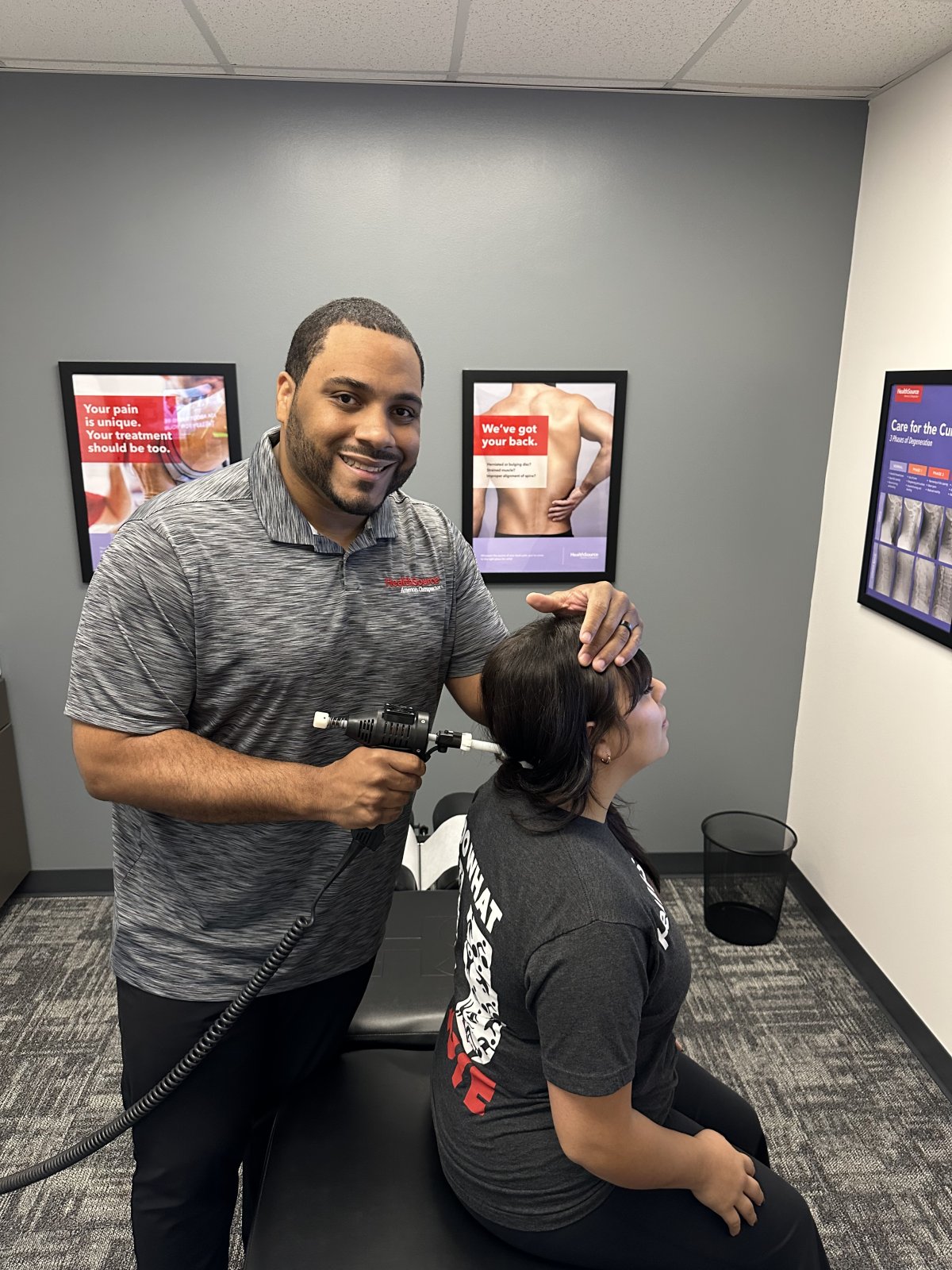
Dr. Everett Tucker, DC
Neck stretches for stress relief work best when you do them often, not hard. Gentle and frequent beats one big stretch once a week.
A Simple Daily Stretch Routine
Use this as a starting point. Do the whole sequence once in the morning and once in the afternoon, and take a 60-second movement break every hour you spend seated.
- Chin tuck: Sit tall. Pull your chin straight back, like making a double chin, without tipping your head down. Hold 5 seconds. Repeat 10 times.
- Side tilt: Drop your right ear toward your right shoulder until you feel a mild stretch on the left side of your neck. Hold 20 seconds. Switch sides. Do 2 rounds per side.
- Shoulder roll: Roll your shoulders back in slow circles, 10 times, then forward 10 times. Keep the motion smooth and avoid shrugging toward your ears.
- Doorway chest stretch: Place your forearms on a door frame with elbows at shoulder height and lean in gently to open your chest. Hold 20 to 30 seconds. Repeat 2 times.
How to Progress Without Flaring Up
Start with the holds above and add time only when the routine feels easy. If a stretch causes a sharp increase in pain that lasts more than a few minutes after you stop, back off the duration or skip that stretch for a few days.
Pair stretching with gentle strengthening, because flexible but weak neck muscles still fatigue quickly under stress.
Why This Matters for Stress-Related Pain
When you are stressed, your neck and shoulder muscles stay switched on longer than they should. Think of the routine as a way to reset muscle tone several times a day, not as a one-time cure.
If you want a broader plan that combines stretching with pacing, relaxation, and tracking, see our guide on how to fix chronic neck pain.
Here is the daily stretch routine the article recommends, with the hold times and repetitions it lists.
Stretch | How to do it | Hold and reps |
|---|---|---|
Chin tuck | Pull chin straight back without tipping head down | Hold 5 seconds, repeat 10 times |
Side tilt | Drop ear toward shoulder until mild stretch | Hold 20 seconds, 2 rounds per side |
Shoulder roll | Slow circles back 10 times, then forward 10 times | 10 times each direction |
Doorway chest stretch | Forearms on door frame, elbows at shoulder height, lean in | Hold 20 to 30 seconds, repeat 2 times |
Upper trap stretch | Lower ear toward shoulder, add very light hand pressure | Hold 15 to 20 seconds per side |
Stress Management for Chronic Pain That Goes Beyond Relaxation
Stress management for chronic pain is not about candles and a bubble bath. It is about lowering the stress load your nervous system carries every day and giving your body reliable ways to recover. The unique angle here is measurement: most advice stops at "try to relax," but a plan you can track is what separates a habit that sticks from one that fades in a week.
Build a Daily Stress-Load Plan
Instead of one big relaxation session, aim for several small resets. A general structure for daily stress management looks like this:
- Morning (5 minutes): Slow breathing before you check your phone. Inhale through your nose for 4 seconds, exhale for 6 seconds, for 5 minutes. A longer exhale nudges your body toward the parasympathetic side of the nervous system, which is the rest-and-digest branch.
- Midday (10 minutes): A short walk, ideally outdoors.
- Afternoon (2 minutes): A movement break and a body scan. Notice where you are holding tension, then deliberately soften your jaw, shoulders, and hands.
- Evening (10 minutes): A wind-down routine with a consistent bedtime.
Track Stress and Symptoms Together
A simple log beats guesswork. Each evening, rate three things from 0 to 10: neck pain intensity, how stressed you felt, and how well you slept. Add one line about what you did that day, such as a walk, a stretch break, or a difficult meeting.
Track function, not just pain. Note whether you could turn your head to drive, sit through a meeting, or sleep through the night.
Address the Load, Not Just the Feeling
Relaxation techniques help, but they work better when you also reduce the sources of stress you can control. That might mean setting boundaries around overtime, breaking long screen sessions into blocks, or talking to a counselor about persistent worry.
Where the Evidence Is Honest About Limits
Stress and chronic neck pain clearly travel together, but the research does not prove that lowering stress will cure every case. Treat it as one lever among several, not a standalone fix.
If you want a step-by-step path that combines these habits with exercise and pacing, our guide on how to fix chronic neck pain lays out seven practical steps.
When to Seek Care for Chronic Neck Pain
Most neck pain is not an emergency. But some symptoms need care right away. Get urgent help for:
- Numbness or tingling that spreads down an arm or into your hand
- Weakness in your arm or hand
- Neck pain after a fall or car accident
- Loss of bladder or bowel control
- Severe pain with fever or unexplained weight loss
For pain that has lasted weeks or keeps coming back, a professional assessment makes sense. If you are weighing chiropractic care, our article on whether chiropractic adjustment is safe for neck pain covers the safety question. Our page on chiropractic care for neck pain explains the treatment options we offer.
Building Your Care Plan at HealthSource Chiropractic of Greensboro
At HealthSource Chiropractic of Greensboro, we build personalized plans that combine chiropractic adjustments with Progressive Rehab®, functional exercise, and therapies like spinal decompression and class IV laser treatment. For a deeper look at what a plan involves, see our chiropractic care for chronic neck pain guide.
That mix matters for stress-related neck pain. Adjustments can address spinal alignment, and rehabilitation and exercise can help build neck strength.
Frequently Asked Questions
Can stress make chronic neck pain worse?
Yes, stress can intensify chronic neck pain. Research links long-term stress, anxiety, and depression to neck pain, and a 2024 study found depression and anxiety had a stronger association with pain intensity and disability in people with neck pain. Stress can trigger prolonged muscle activity in the neck and shoulders, which adds tension to an area already sensitized by chronic pain. That does not mean stress is the sole cause, but managing it is a reasonable part of a broader care plan. A clinician can help you sort out which factors matter most in your case.
How can I relieve stress-related neck pain at home?
Start with gentle movement rather than stillness. Slow neck stretches, shoulder rolls, and breathing exercises can ease muscle guarding, and short breaks from desk work help break the tension cycle. Heat before stretching and a consistent sleep routine support recovery. Some research suggests that stress management may help by reducing excessive muscle activity in some people. If pain persists beyond a few weeks, worsens, or comes with numbness or tingling, get assessed rather than relying on home care alone.
When should I see a healthcare professional for chronic neck pain?
Seek care when neck pain lasts more than a few weeks, keeps returning, or interferes with work and sleep. Get urgent assessment for numbness, tingling, weakness in the arms or hands, severe headache, or pain after an accident or fall. A professional evaluation can identify what is driving your symptoms and rule out causes that need different treatment.
What exercises help with neck tension from stress?
Chin tucks, slow side-to-side neck turns, shoulder blade squeezes, and gentle upper-trapezius stretches are common starting points. Pair them with diaphragmatic breathing to counter the fight-or-flight response. Move slowly and stop if pain sharpens or radiates. Research on stress and neck pain points to prolonged muscle activity as one possible mechanism, which is why brief, frequent movement breaks are often suggested. A clinician or physical therapist can tailor exercises to your specific presentation.
Chronic neck pain rarely has one cause, and stress is often part of the mix. If tight muscles, tension headaches, and years of stiffness sound familiar, you don't have to keep guessing. HealthSource Chiropractic of Greensboro offers personalized care plans, Progressive Rehab®, and modern tools like spinal decompression to help you move and feel better. Get started with HealthSource Chiropractic of Greensboro and take the first step toward lasting relief.