 how-to
How Often Should You Get Spinal Decompression Treatments?
Table of Contents
- How Often Should You Get Spinal Decompression Treatments?
- Why There's No Single Schedule That Fits Everyone
- How Many Spinal Decompression Sessions Do You Need?
- What a Spinal Decompression Treatment Plan Usually Looks Like
- The Spinal Decompression Treatment Timeline: When You May Notice Results
- What Happens During a Session and How Long It Takes
- Factors That Change Your Treatment Frequency
- Safety, Contraindications, and Warning Signs to Know
- How Your Chiropractor Assesses Progress and Adjusts Care
- Frequently Asked Questions
Last Updated: October 20, 2026
How Often Should You Get Spinal Decompression Treatments?
There is no single answer to how often should you get spinal decompression treatments. A published research protocol used 30-minute sessions five times per week for four weeks, then weekly sessions for four more weeks, according to Daniel's 2007 spinal decompression study. That's a study design, not a rule for every patient.
At HealthSource Chiropractic of Greensboro, we build each schedule around your exam findings, your symptoms, and how your body responds in the first couple of weeks.
Here's the part most guides skip: the right frequency is the one your provider reassesses as you go. Below, we break down session counts, timelines, what a visit actually involves, and the warning signs that mean you should stop and call your doctor.
Why There's No Single Schedule That Fits Everyone
Spinal decompression is a non-surgical technique that gently stretches the spine to reduce pressure on discs and nerves. Because disc problems vary so much in cause and severity, no single visit schedule fits every case.
Clinic guidance published online ranges widely. Some practices describe 12 to 20 appointments over four to six weeks. Others list 15 to 30 sessions over four to six weeks, or 12 to 24 sessions over four to eight weeks. That spread tells you something useful: providers are matching frequency to the patient in front of them, not following one universal formula.
A disc issue that has built up over years usually needs a longer course than a recent injury. Your age, overall health, and how much disc involvement shows on imaging all shift the plan too.
How Many Spinal Decompression Sessions Do You Need?
Most treatment plans call for somewhere between 12 and 28 sessions, though severe cases may run longer. The total depends on your diagnosis, symptom severity, and how quickly you respond.
Here's what the published ranges look like:
| Source Type | Sessions | Course Length |
|---|---|---|
| Study protocol (Daniel, 2007) | 24 sessions | 8 weeks |
| Clinic guidance, lower end | 12 to 20 visits | 4 to 6 weeks |
| Clinic guidance, broader range | 20 to 28 sessions | 4 to 8 weeks |
| Severe cases, per clinic guidance | up to 36 visits | varies |
The 2007 study protocol worked out to 24 sessions total: 20 visits at five per week for four weeks, plus four weekly visits after that. That's a research schedule, and the author presented it as a protocol, not a universal recommendation.
If a provider quotes you a fixed number before examining you, ask why. A plan built on your clinical assessment will always beat a number pulled off a website.
What a Spinal Decompression Treatment Plan Usually Looks Like
A typical plan has three phases: an intensive opening stretch, a tapering middle, and a maintenance stage once symptoms settle. Early visits come more often because that's when the tissue response builds.
In practice, the first phase usually means two to three visits per week.
The middle phase spreads visits out as your symptoms change. The final phase drops to occasional check-ins, often monthly or quarterly, or only when symptoms flare.
What most guides miss is how much the plan bends. Your provider should adjust the treatment schedule based on your progress assessment, not lock you into a printed calendar.
The Spinal Decompression Treatment Timeline: When You May Notice Results
Some patients notice pain relief within the first few visits. Others need a few weeks before symptoms shift meaningfully. The evidence on timing is genuinely mixed.
Reviews of spinal decompression research have reached different conclusions. Some found it unproven or no better than simpler treatments. Others reported meaningful pain improvement and measurable gains in disc height and spinal canal space after a full course.
That's worth sitting with. A realistic timeline looks like this:
- First 1 to 2 weeks: early changes in pain and mobility, or none yet
- Weeks 3 to 4: clearer signal on whether the plan is working
- Weeks 4 to 8: the window where most courses finish
- After the course: maintenance visits if symptoms stay quiet
If nothing changes by the midpoint of your plan, that's useful information. It's a reason to reassess, not to keep grinding through the same schedule.
What Happens During a Session and How Long It Takes
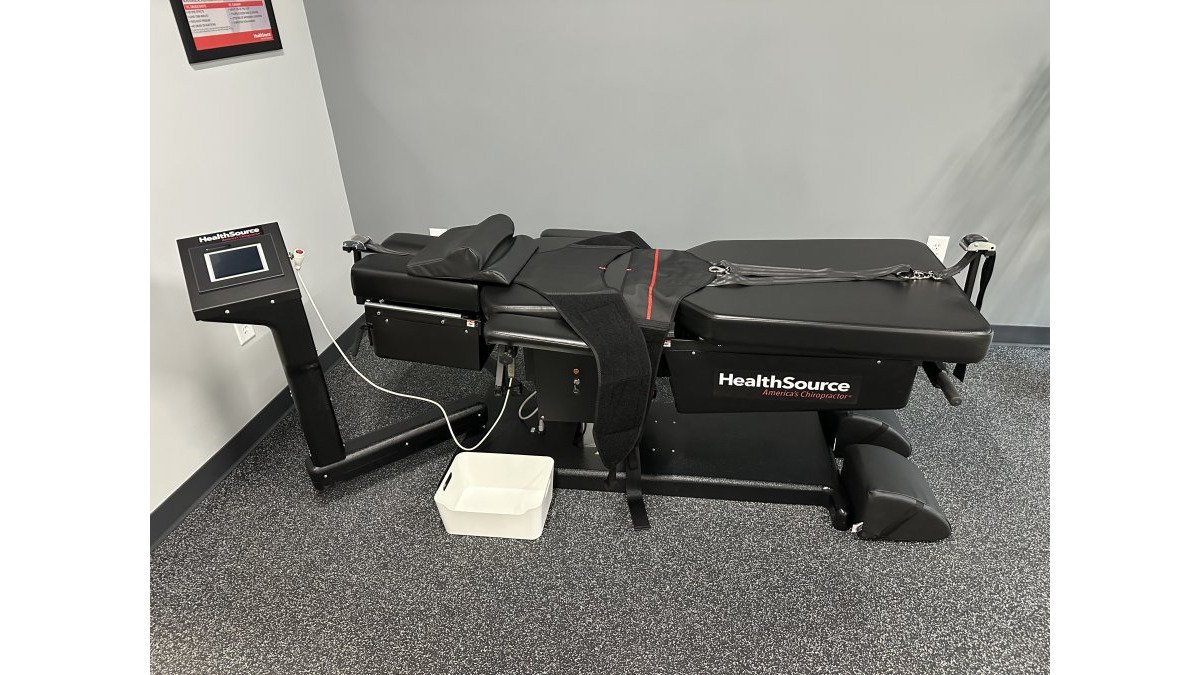
A spinal decompression session typically lasts 30 to 45 minutes, including setup and monitoring. You lie fully clothed, face up or face down depending on the table and the target level, while a harness secures your pelvis and another secures your upper body. The table then applies controlled traction to the spine.
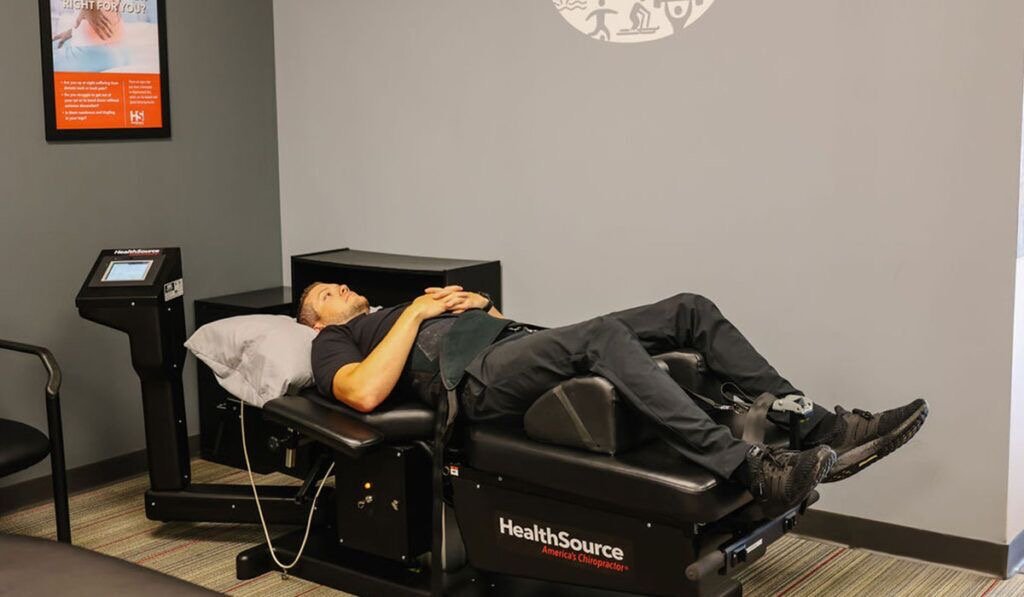
First, a word on terminology, because it causes real confusion. The phrase "spinal decompression" gets used for two very different things:
- Non-surgical mechanical decompression (what this article covers): a motorized table that cycles traction on and off, creating negative pressure inside the disc space. This is the therapy scheduled in multi-visit courses.
- Surgical spinal decompression: an operation, such as a laminectomy or discectomy, performed to relieve pressure on the spinal cord or nerve roots. It is a one-time procedure with a surgical recovery, not a series of table visits.
If a provider quotes you a visit schedule, confirm you are discussing the non-surgical table therapy. The frequency advice in this article applies only to that.
During a mechanical session, the table cycles between gentle pull and release. That rhythm is the point: it creates negative pressure inside the disc space, which may help a bulging or herniated disc move back off a nerve. The provider sets the force, hold time, and rest time based on your body size, the spinal level being treated, and your comfort. You should feel a stretch, not sharp pain.
Most visits include more than the table. At HealthSource Chiropractic of Greensboro, decompression often sits inside a broader plan that combines chiropractic adjustments with Progressive Rehab® and functional exercise, so the gains hold between visits.
Expect to feel relaxed or mildly stretched afterward. Some people feel sore for a day. Most go back to work the same day. A typical first visit also includes a brief check-in on how you responded to the last session, which is where the schedule starts to bend to your response rather than a printed calendar.
Factors That Change Your Treatment Frequency
Your provider weighs several things when setting how often you come in. These are the ones that move the schedule most:
- How long you've had the problem. Long-term pain often needs a longer course than a recent injury.
- Imaging findings. A large herniated disc with nerve pressure usually needs a denser early schedule.
- Your response in the first two weeks. Fast responders taper sooner.
- Consistency with home exercises. Patients who do their rehab work tend to need fewer visits.
- Whether decompression is combined with other care. Adjustments, laser therapy, or rehab can change the plan.
- Your schedule and travel. A plan you can actually follow beats a perfect one you can't.
Safety, Contraindications, and Warning Signs to Know
Spinal decompression is generally well tolerated, but it is not right for everyone. A proper patient evaluation should screen you out if you have certain conditions.
Providers typically avoid decompression for people who are pregnant, have had spinal surgery with hardware, have fractures, tumors, or severe osteoporosis, or have abdominal aortic problems. Tell your provider about any implants, blood thinners, or recent injuries before your first visit.
Stop and call a healthcare professional right away if you notice:
- New or worsening numbness in the groin or inner thighs
- Loss of bladder or bowel control
- Sudden weakness in both legs
- Severe pain that keeps getting worse instead of better
Those symptoms can signal a serious nerve problem and need urgent medical review, not another appointment.
How Your Chiropractor Assesses Progress and Adjusts Care
Progress gets measured, not guessed. Your provider should track specific, repeatable measures at set checkpoints rather than relying on a general sense that you feel better. Practical measures include:
- Pain: a 0-to-10 rating at rest and with movement, recorded at each checkpoint so the trend is visible.
- Function: how well you do daily tasks such as sitting, bending, lifting, and sleeping through the night.
- Mobility: range of motion in the spine and any change in nerve-related symptoms such as tingling or weakness.
- Medication use: whether you are taking fewer pain relievers than before.
Expect a re-exam around the two-week mark and again at the end of the course. Those checkpoints matter because they are where the plan should change based on data, not habit.
What happens next depends on what the reassessment shows:
- Clear improvement: visits taper, and the plan shifts toward maintenance and home exercise.
- Partial or plateaued improvement: the plan changes, which may mean adjusting frequency, adding a different modality, or changing the exercise program.
- No meaningful improvement by the midpoint: that is a signal to reassess the diagnosis and consider other care options, including referral to another provider. It is not a reason to keep grinding through the same schedule.
At HealthSource Chiropractic of Greensboro, that review is built into care. Our team pairs decompression with Progressive Rehab® and functional exercise, then adjusts the schedule based on what your reassessment shows, not a fixed calendar.
Ask directly at your first visit: "When will we review whether this is working, what will you measure, and what happens if it isn't?" A good provider answers without hesitation and can tell you the specific checkpoints in advance.
Frequently Asked Questions
How many spinal decompression sessions do you need?
There is no universal number. Clinic guidance in the research ranges from roughly 12 to 20 appointments over four to six weeks, 15 to 30 sessions over four to six weeks, and 12 to 24 sessions over four to eight weeks. One published study used 30-minute sessions five times per week for four weeks, then weekly sessions for four more weeks. That is a research protocol, not a rule for every patient. Your chiropractor should set a spinal decompression treatment plan based on your diagnosis, symptom severity, and how you respond in the first few visits.
Can you have spinal decompression treatments too often?
Going beyond a schedule your provider sets does not speed up results and may increase soreness. If you feel pressured into more visits than your plan calls for, ask why. A qualified healthcare professional should be able to explain the reasoning behind each change to your treatment frequency.
Is spinal decompression a permanent fix?
It is not a guaranteed cure. The evidence is mixed: some reviews find it unproven or no better than simpler treatments, while some studies report meaningful pain improvement and measurable gains in disc height and spinal canal space. Many patients move to maintenance care after the initial course, with less frequent visits such as monthly or quarterly, or as symptoms indicate. Keeping up with rehabilitation exercises and posture habits matters for lasting results. Ask your chiropractor what long-term relief realistically looks like for your specific disc issue.
When should you stop spinal decompression treatments?
Stop or reassess when your progress stalls. If you have completed a reasonable course, such as several weeks of scheduled sessions, and see no meaningful change in pain, mobility, or function, that is a signal to revisit the plan rather than simply add more visits. Your provider should track functional improvement and symptom relief at set checkpoints. If symptoms worsen, or you notice new numbness, weakness, or loss of bladder or bowel control, seek medical evaluation promptly instead of continuing treatment.
Back pain that's lingered for months doesn't fix itself, and guessing at a treatment schedule wastes both time and money. If you're ready for a plan built around your actual exam findings, our team at HealthSource Chiropractic of Greensboro can help. We combine spinal decompression with chiropractic adjustments, Progressive Rehab®, and functional exercise under one roof, with progress reviews built into the plan. Schedule an appointment and get a clear answer on what your care should look like.